

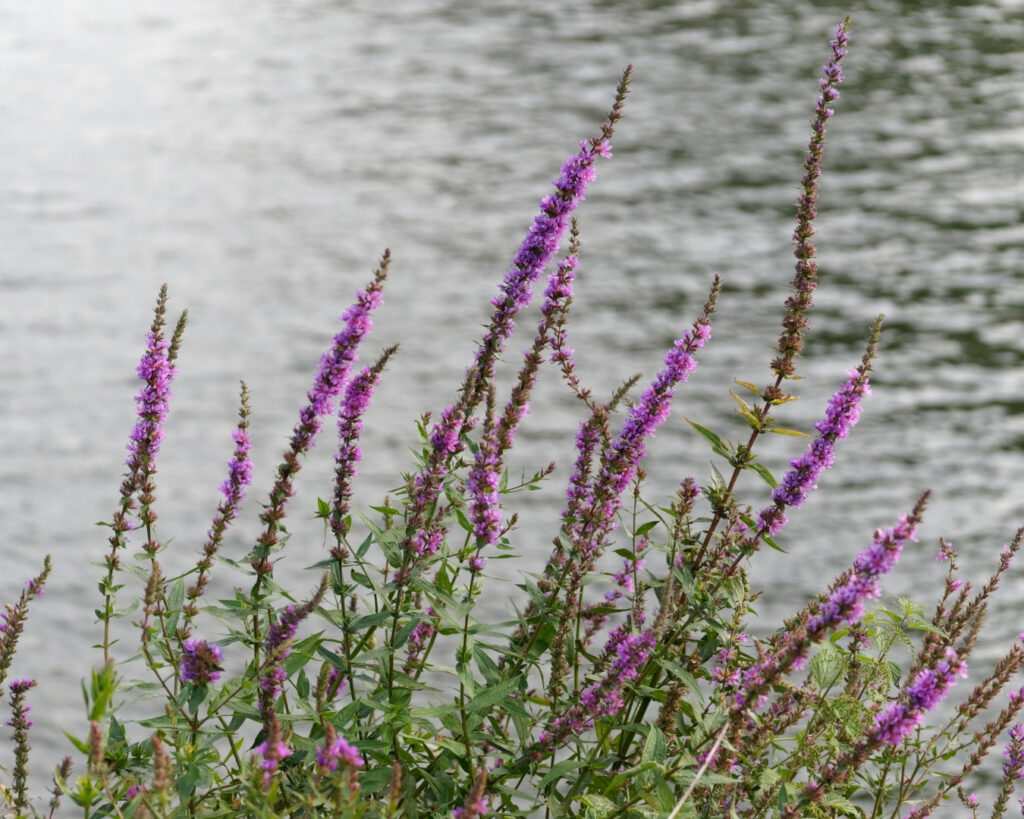
Have you seen this purple flower before?
While Purple Loosestrife may look appealing, it is an invasive plant, causing ecological havoc.
Purple Loosestrife (Lythrum salicaria L.) is a highly invasive plant that is often found along shorelines. The plant was introduced to the US in the 1800s as an ornamental species native to Europe and Asia. Purple Loosestrife can now be found in every Canadian province and American state except Florida, Alaska, and Hawaii.
But there is a way you can help reduce the spread from home.
Ecological Impact
Invasive species like Purple Loosestrife cause recreational, economic, and ecological damage. And, change how residents and visitors use and enjoy Minnesota waters.
Purple loosestrife impacts:
- Dense growth along shoreland areas makes it difficult to access open water
- Overtakes habitat and outcompetes native aquatic plants, potentially lowering diversity
- Provides unsuitable shelter, food, and nesting habitat for native animals
- Dense root systems change the hydrology of wetlands
In fact, Purple Loosestrife is so harmful that it has been classified as a Prohibited Noxious Weed by the Minnesota Department of Agriculture. Which means it is unlawful (a misdemeanor) to possess, import, purchase, transport, or introduce this species except under a permit for disposal, control, research, or education.
Controlling the Spread
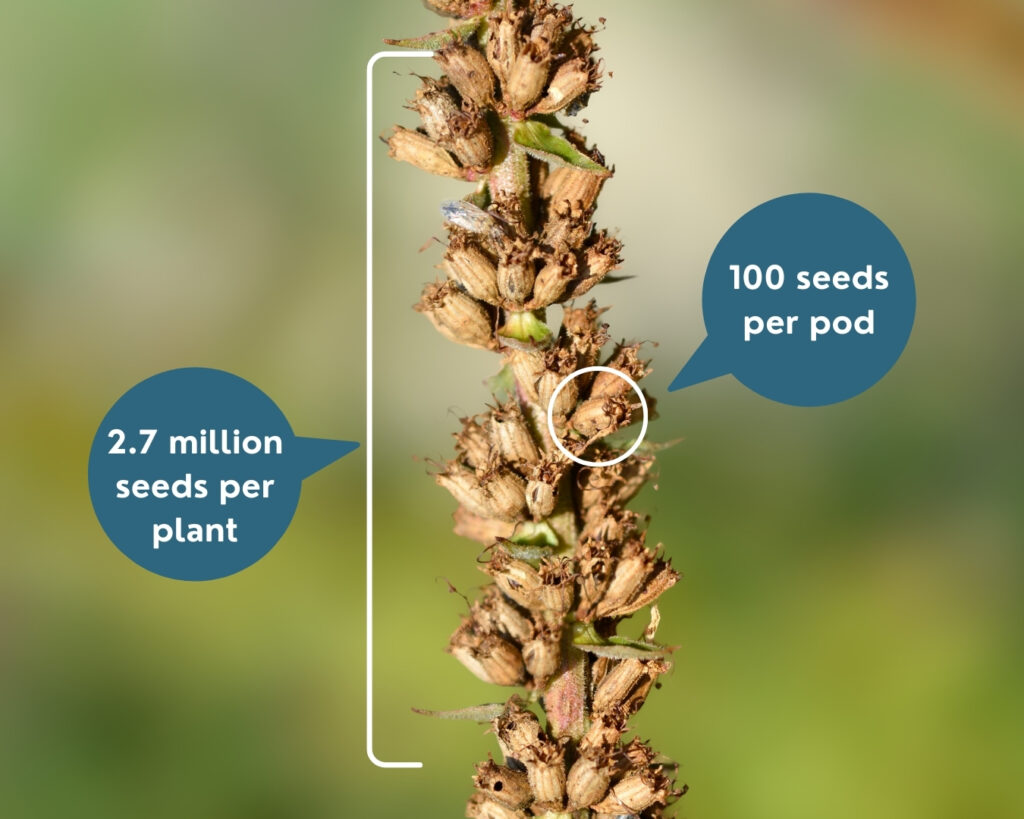
Purple loosestrife is spread by people through water recreation and uninformed garden planting. The plant produces millions of tiny seeds that drop along shoreland areas in the fall. Seeds can be hidden in mud, stick to boots and waders, and other gear. It can also be spread by large-scale roadside maintenance equipment.
To reduce the spread, always remember to Clean. Drain. Dispose. Dry. after recreating, even if a lake is not listed as infested.
- Clean watercraft of all aquatic plants and prohibited invasive species
- Drain all water by removing drain plugs and keeping them out during transport
- Dispose of unwanted bait in the trash
- Dry docks, lifts, swim rafts, and other equipment for at least 21 days before placing equipment into another water body
Once the plant is present, it can be controlled through herbicide control or biological control. Herbicides are often used for aquatic plant management, like Curly-Leaf Pondweed and Eurasian Watermilfoil. Biological control, utilizing the Galerucella beetle, has shown to effectively decrease Purple Loosestrife seed output.
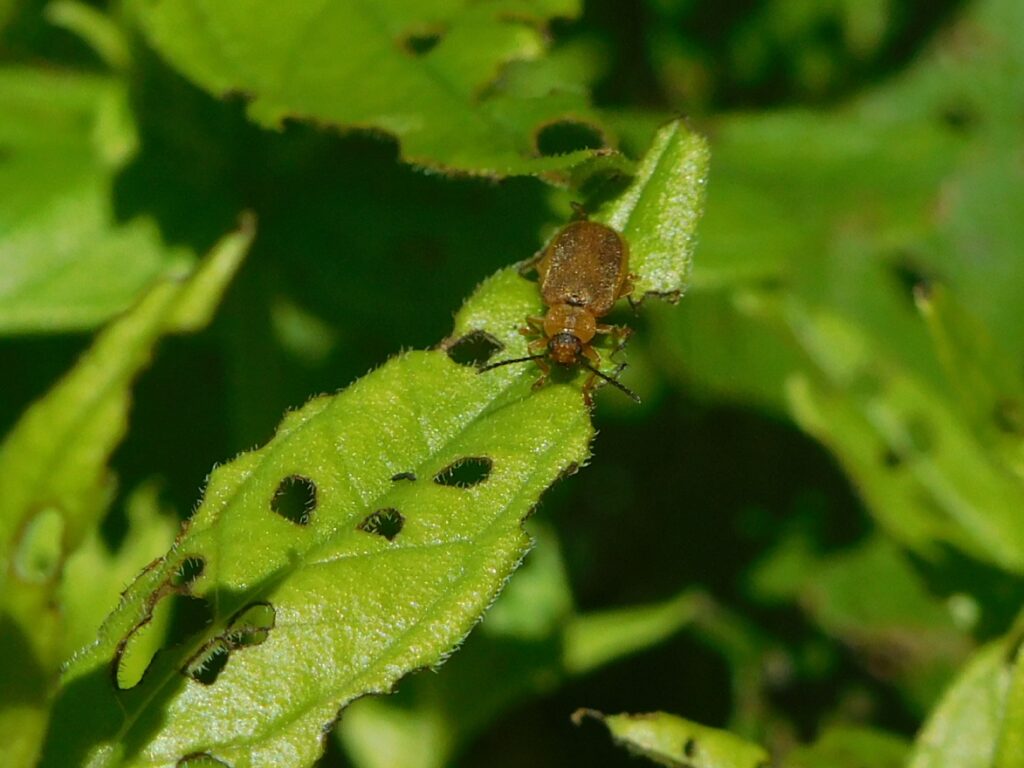
Galerucella Beetle
Researchers began looking for a biological agent to control Purple Loosestrife in the mid-1980s. But the agent had to be safe and not cause a secondary invasive species problem. In the search across Europe, over 100 insect species that would feed on purple loosestrife were identified. Between 1987 and 1991, testing of the beetles was conducted. Testing in the field and the lab was first performed in Europe. Then, later, in North America, under quarantine.
Following testing, four species of beetles were federally approved for release into Minnesota. Of those four was the Galerucella Beetle, a leaf-eating beetle. The beetle impacts the growth and seed production of purple loosestrife by feeding on its leaves and new growth shoots.
The long-term goal is to limit the growth of purple loosestrife and limit its environmental impact. It is not likely that it will be fully eradicated. However, reducing its presence will help to make it only a small part of the plant community, and not the dominant one. Of the sites where leaf-eating beetles were released in 1992, over 90% of them have established a reproducing population. They have also dispersed from release sites and established at new sites. Leaf-eating beetles have been found on unmanaged purple loosestrife infestations more than 12 miles away from their release site.1
Purple Loosestrife in the Watershed
Purple loosestrife has been observed in and around lakes in the South Washington watershed. It was last observed at La and Powers Lakes in 2021, during the end of season survey. It was also historically observed at Armstrong Lake, but has not been seen since the 2024 survey. Despite the decreasing presence in observed lakes, purple loosestrife can still spread throughout the watershed.
Become a Beetle Parent & Citizen Scientist
To support the control of purple loosestrife in Minnesota, the Wild Rivers Conservancy began an effort to encourage volunteers in eligible areas to raise Galerucella beetles for release.
Funding for this project was provided by the Minnesota Environment and Natural Resources Trust Fund as recommended by the Legislative-Citizen Commission on Minnesota Resources. To help facilitate this effort, Wild Rivers Conservancy is creating a group of volunteers of Minnesota residents in eligible counties and townships who wish to support beetle rearing, guided by Wild Rivers Conservancy Staff. For more information, check out the Wild Rivers Conservancy website.
This program is run and supported by the Wild River Conservancy, a non-profit organization supporting the St. Croix River Watershed. Contact Maria Young, Invasive Species Coordinator with the Wild River Conservancy at [email protected].