

Have you ever been walking near a pond or lake and spotted what looked like a green, slimy substance on the water’s surface? You may have been seeing Blue-green algae, a harmful bacteria bloom that can occur when the temperature goes up, and nutrients are high.
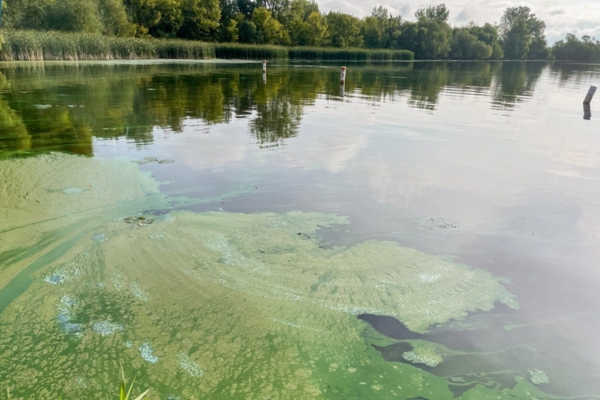
While Blue-green algae is often referred to as algae, it’s actually a type of bacteria called cyanobacteria. Cyanobacteria are normally present in bodies of water and are common in Minnesota, playing an important role in the biological function of lakes. However, there are thousands of types of cyanobacteria, with some being benign and others becoming toxic to humans and animals.
Blue-green algae generally can occur when the sun is out and water temperatures are higher than 75°F, in warm, calm, nutrient-rich waters. Which means blooms often occur in the summer and early fall, but can also be found at other times of the year if conditions are right.
Since many types of cyanobacteria normally and regularly exist in Minnesota waterbodies, the important way to prevent toxic algae blooms from occurring is to stop nutrient loading of nitrogen and phosphorus. Excess nutrients come from several sources, including stormwater runoff, agricultural runoff, and at-home fertilizers, which contain nitrogen and phosphorus. These nutrients stimulate growth and cause an overabundance of nutrients that cyanobacteria and other algae thrive on.
Both people and animals can be affected by the harmful effects of toxic cyanobacteria. Exposure can occur through swallowing or having skin contact with water containing the toxic algae, or by inhaling tiny droplets of water in the air. Symptoms of exposure in humans can include vomiting, diarrhea, rash, eye irritation, cough, sore throat, and headache. If you think you have come in contact with blue-green algae, rinse off the area with clean water soon afterwards and consider seeking medical assistance if symptoms worsen.
Dogs, in particular, are at a high risk of exposure due to their behavior. Dogs are much more likely to wade into scummy water, and tend to swallow water as they swim, lick their coats afterwards, and ingest the algae. Symptoms of exposure in dogs and other animals can include vomiting, diarrhea, rash, difficulty breathing, general weakness, liver failure, and seizures. Several dog deaths in Minnesota have occurred due to blue-green algae exposure, so if your dog begins to exhibit these symptoms after swimming in a pond or lake, seek veterinary care immediately.
Prevention is the best way to avoid blue-green algae exposure, so it is important to know the signs. The sure way to determine if harmful cyanobacteria are present is through lab testing, which takes time, money, and may not be widely available. If you think you are seeing blue-green algae, here is what to look for:
- If there are patches of water that look as if pea soup or green paint is floating on the surface
- If recent temperatures have been high, and rainfall low, leading to warmer water
- If the water is calm, like in stormwater ponds or a quiet lake bay
The Minnesota Pollution Control Agency (MPCA) provides a guide on how to conduct a Jar Test, which is an at-home way to tell the difference between blue-green algae vs. an overabundance of more beneficial types of planktonic algae that can present similarly. However, the sure way to determine if harmful cyanobacteria are present is through laboratory testing.