
The South Washington Watershed District (SWWD) works with its partner cities to identify and develop plans, connect partners, and help secure funding for the restoration and enhancement of natural areas within city open spaces. These activities help to support the SWWD mission of enhancing open spaces to provide habitat, build soil health, create resilient natural communities, and protect water quality, all intended to support overall watershed health.
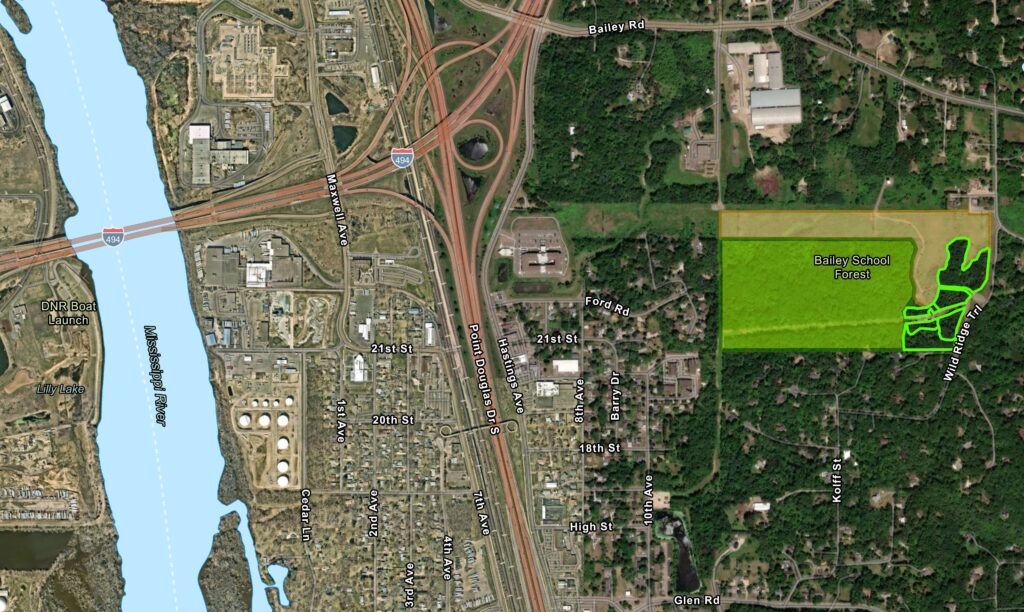
The Bailey School Forest Park (BSFP) is a 60-acre dedicated park located along the steep bluffs above the Mississippi River Valley. The park comprises a mix of Oak Forest, Oak Savanna, and Prairie extending over steep bluffs and deep ravines. It is recognized as a School Forest by the Minnesota DNR, having provided outdoor learning opportunities for students from South Washington Schools for years. Park planning has focused on two distinct natural community types, oak woodland/forest and open grasslands/savanna, both within and adjacent to existing electrical utility line corridors. SWWD is working to enhance and protect this open space through several initiatives and collaborations with state and local partners, as well as non-profit collaborators, leveraging funding through partnerships.
Partnering with the state to improve habitat on a large utility corridor
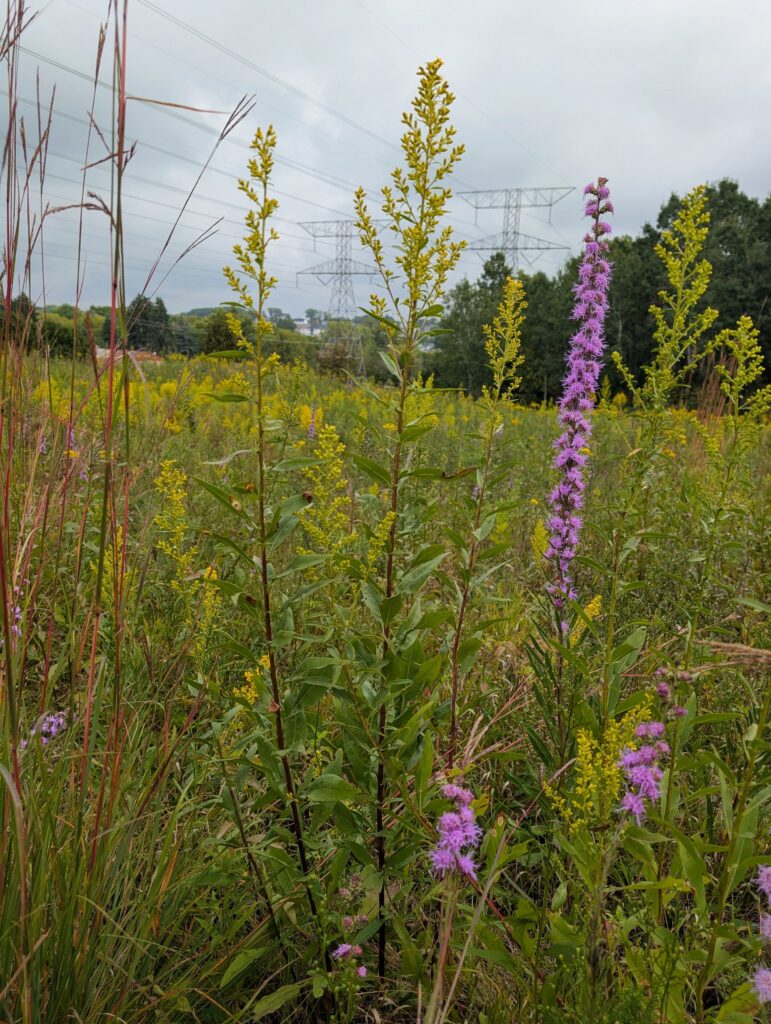
The first phase of work, which began in 2024, focuses on roughly 20 acres of openings within the park, largely dominated by grasslands both within and outside of a large transmission line corridor. The grasslands within the transmission line corridor have been maintained to limit the growth of woody plant material to facilitate the safe operation of overhead powerlines. Under utility lines, woody vegetation is viewed as a potential hazard to operations, so partners are committed to restoring the grassland habitats with minimal trees and shrubs while substantially increasing the diversity of deep-rooted native grasses and flowering herbaceous species. SWWD is collaborating with the Minnesota Board of Water and Soil Resources (BWSR) and its Habitat Friendly Utility Program to help meet the operations and safety needs of the utility corridor, while also enhancing the habitat quality of the site located immediately above the Mississippi River.
Work began in 2024 with a full mowing to suppress woody vegetation. Over three years, a combination of herbicide application, mowing, prescribed fire, and reseeding of grasses and flowers will reestablish a more diverse grassland. After this initial restoration and establishment period, city staff will be able to continue managing the site through regular maintenance using existing city equipment.
SWWD and BWSR are working with a contractor to assess different approaches to woody vegetation and cool-season grass control by assessing timing differences combined with mowing, prescribed fire, and chemical type. This information will expand the knowledge base for professionals regionwide working on similar utility projects as the data becomes available. BWSR will make findings available on its What’s Working Program page.
Improving Habitat and Beauty in a Woodland Park Entry
Beginning in fall 2025, SWWD, in collaboration with the City of Newport, and with funding from the Minnesota DNR Conservation Partners Legacy program, will be working to improve habitat in a 9-acre area at the entry to the BSFP. The site is a mixed forested community with a heavy shrub layer dominated by native and non-native species and areas of bare soil under heavy shade. Non-native species are abundant or dominant throughout most of the site, in all strata, offering far less habitat for a variety of native plant and animal species than is possible or desirable. Some of the tree stands are comprised of non-native conifers planted too closely together, and in the absence of maintenance, many trees have become unhealthy. Heavy shade limits the potential for natural conversion to the native oak-dominated communities still present in the surrounding landscape. Oaks planted in past years have rarely reached maturity due to competition and shading. Additionally, there are areas of bare soil with limited plant growth, which have created concerns for water quality and sediment loss.
SWWD has had success working on multi-year conversions of mixed disturbance forests using mechanical methods (grazing and forestry mowing) to severely weaken undesirable woody vegetation before the use of chemical treatments and revegetation. Qualified native plant contractors will conduct forestry mowing, protecting desirable native woody species while clearing the thick shrub layers. Protected species will focus on native shrubs, white pine, and oaks, as well as some non-native and early successional trees that will maintain vertical structure and a woodland character. Initial mowing will take place on frozen ground to protect soils. A second, growing-season mowing, followed by goat grazing, will continue to weaken these woody weed species. This approach minimizes the use of herbicides while tapping energy reserves of the invasive shrub species. The site will be gradually reseeded over the course of three years to bring back a diverse ground layer of native grasses, sedges, and flowers.
This approach to restoration will provide opportunities for students from the South Washington County School District to participate in restoration activities with the SWWD, overseeding the site in successive “seed rains”. After invasive species are under control, students and the SWWD will begin to replant trees.
Opening up an Oak and Aspen woodland to improve native plant communities
An additional collaboration between the SWWD and Great River Greening will use funds mostly provided by the State of Minnesota Outdoor Heritage Fund to begin restoration activities in the 40-acre forest and woodland along the steep western-facing bluffs above the Mississippi River. Work will begin on 10 acres in Winter, 2025/26, to open up the ground layer to more light by removing areas of dense understory buckthorn. Distinct from the restoration of the entry woodland, this area contains abundant, healthy native oaks and other trees. Thinning of the canopy and opening up the ground layer to more light will help facilitate the reestablishment of a more diverse and rich community of grasses, flowers, and shrubs, and allow for the future regeneration of native trees already present on the site. The work will rely on a combination of hand cutting, treating, and forestry mowing in the dense patches dominated by buckthorn. This will be followed by selective thinning of the canopy to encourage a healthy canopy of native trees typical of Oak Savanna and Oak Forest Communities. The presence of Oak Wilt and the needed removals, along with openings created by Emerald Ash Borer-infested trees, will create gaps in the canopy where conditions will be appropriate for Oak Savanna, and more closely grown oaks will facilitate the restoration of Oak Forest and Aspen Woodlands.
Questions? Contact Tony Randazzo, Watershed Restoration Specialist, [email protected].