

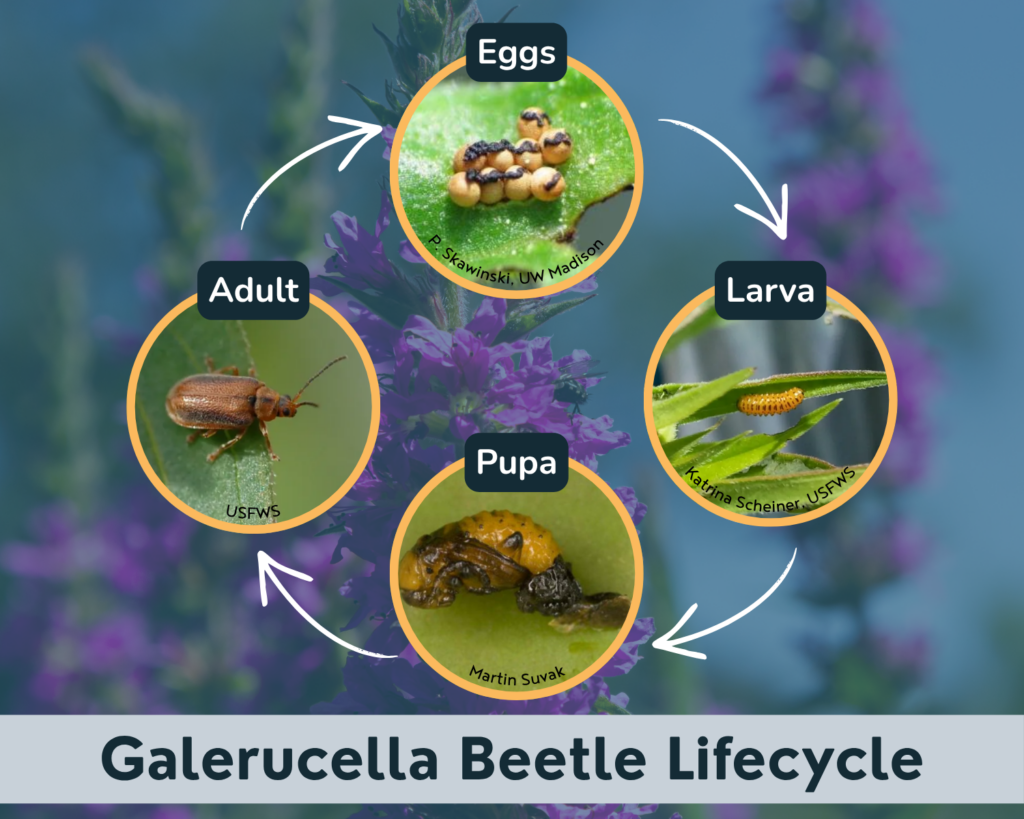
To control the spread of invasive Purple Loosestrife (Lythrum salicaria L.) along pond and lake shorelines, a tiny and very hungry beetle has been recruited to help. The Galerucella Beetle (Galerucella), discovered by scientists for its exclusive taste for Purple Loosestrife leaves, is a tiny European beetle that has been used as a biological control since the 90s. Today, volunteers raise the beetles for release throughout Minnesota in the Beetle Parent program hosted by the Wild River Conservancy with funding from the SWWD.
Why is purple loosestrife a problem?
Purple Loosestrife was first brought to North America in the 1800s as an ornamental species originally native to Europe and Asia. The plant is highly invasive, and can now be found in every Canadian province and American state except Florida, Alaska, and Hawaii. Purple Loosestrife has recreational, economic, and ecological impacts, changing how residents and visitors enjoy Minnesota waters and environment.
Purple Loosestrife impacts include:
- Dense growth along shoreland areas makes it difficult to access open water
- Overtakes habitat and outcompetes native aquatic plants, lowering ecosystem diversity
- Provides unsuitable shelter, food, and nesting habitat for native animals
- Dense root systems change the hydrology of wetlands
In fact, Purple Loosestrife is so harmful that it has been classified as a Prohibited Noxious Weed by the Minnesota Department of Agriculture.
There is only a small window of time to manage and control it. But even then, seeds can be easily spread by humans, wind, birds, other animals, and equipment.
Biological control of invasive species
By the mid-1800s, researchers began looking for a way to control the population with a biological control agent. But, the agent had to be safe, and not cause any secondary invasive species problems. Biological control is a form of invasive species management by leveraging natural enemies, like predators, parasitoids, or pathogens. This process, when done intentionally, can be very successful in invasive species management.
Between 1987 and 1991, testing of the beetle was conducted to ensure it would not cause additional negative environmental impact. Through field and lab testing in Europe, it was discovered that the Galerucella Beetle exclusively fed on Purple Loosestrife leaves, making it a ideal candidate. The beetle was later tested under quarantine in North America.
A hungry, hungry beetle
Once it was determined that the Galerucella Beetle was a safe and effective biological control method, it was federally approved to be used in the wild. In 1990, the beetle was released in Purple Loosestrife patches in several lakes and ponds throughout Minnesota. Once applied, the beetle goes to town on the leaves of the Purple Loosestrife plant, which impacts the plants ability to photosynthesis and stunting seed production.
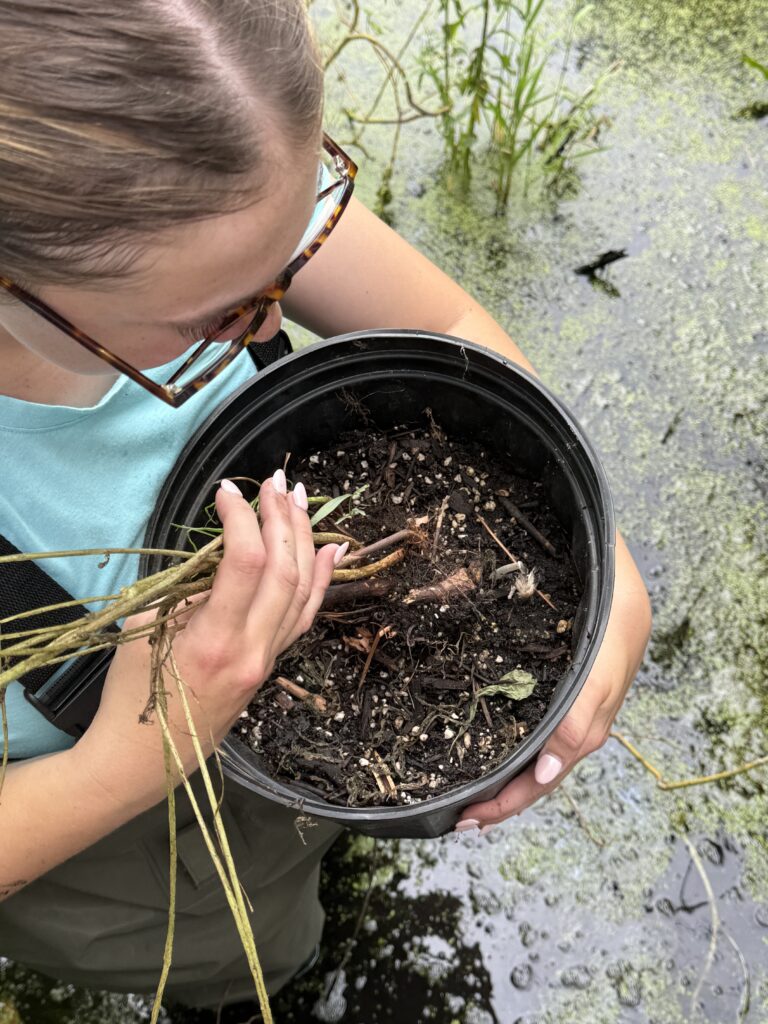
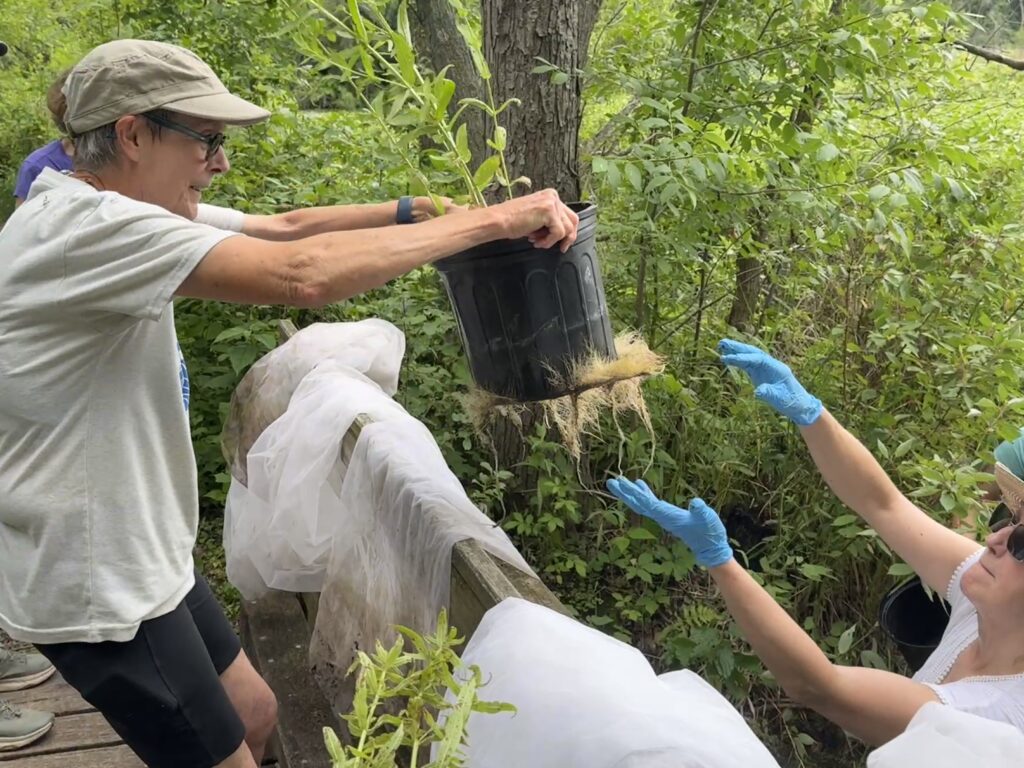
Local volunteers participating in the Beetle Parent program gathered at the Maplewood Nature Center in Maplewood to release the beetle babies they had been raising since the spring. When volunteers joined the program, they were given a pot containing a wild Purple Loosestrife root inside a mesh sack to contain the beetles while they grew. A container with Galerucella Beetle pupa is dropped into the pot, where they submerge themselves in the soil to develop into pupa. Once developed, the beetle emerges as an adult and begins to search for its food source, purple loosestrife. In this case, the food was bountiful and immediately available.
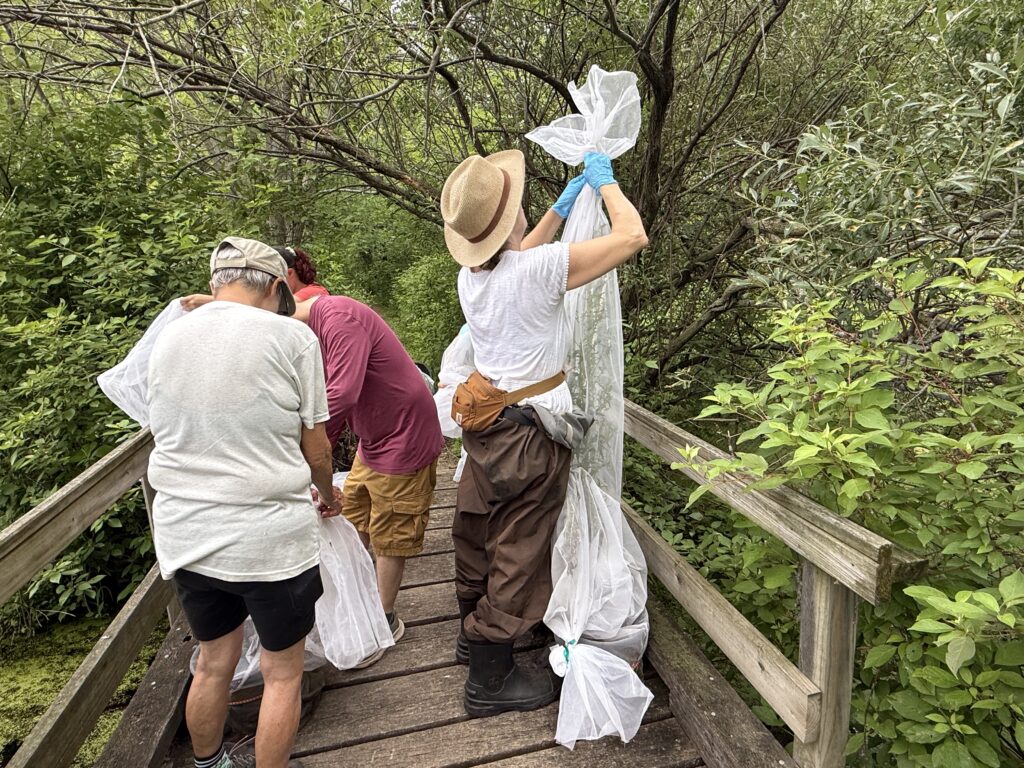
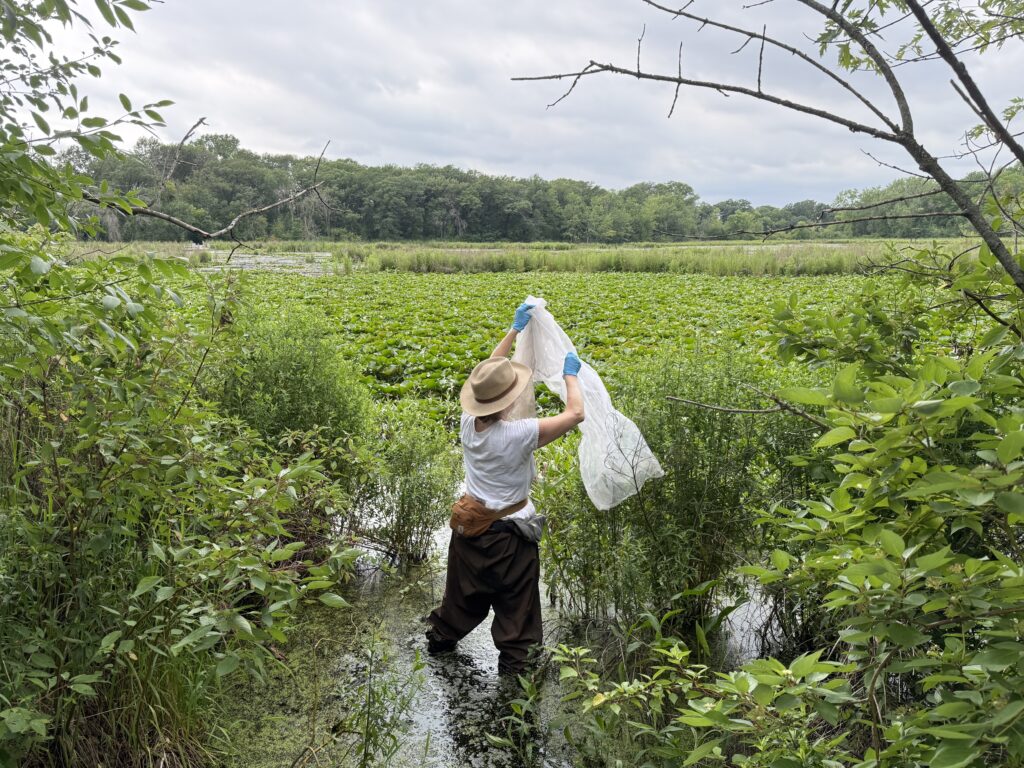
At the Maplewood Nature Center, volunteers brought their netted plants out to the shore to shake out the nets releasing the beetles into the wild. Each plant was carefully inspected for blooms or too much greenery to prevent further spread. Since the potted soil of the beetle home contained a multitude of Galerucella Beetle larva, the plant is planted to release additional beetles once they develop. In total, around 1,500 beetles were released upon the one patch of Purple Loosestrife on the edge of the invaded lake.
Expected impact
Once these prolific eaters are released, they are expected to reproduce quickly. In the Beetle Parent program, it was estimated that just ten beetles on ten plants can easily turn into 10,000 beetles by the end of August due to their quick rate of reproduction. In other studies, it was found that of sites where the beetle was released, over 90% of those sites created a reproducing population. It was also found that those populations dispersed from released sites and established new sites nearby. In fact, populations have been found on unmanaged Purple Loosestrife infestations more than 12 miles away from their original release site.1
At the Maplewood Nature Center, volunteers released an estimated 1,500 beetles.
Get involved
If you are interested in becoming a beetle parent and volunteer citizen scientist, you can sign up to become one on the Wild River Conservancy website. Interest forms open in February and are available for a month. Space is limited, with only 25 volunteer spaces available for the year.
Questions? Contact Water Resources Program Coordinator, Abby Tekiela, at [email protected].