

If you’re draining your swimming pool or hot tub, you’ll need to take a few extra steps to avoid polluting local water bodies with chlorine. The easiest method is to stop adding chemicals and leave the water exposed to the air for 3-5 days to naturally break down the chlorine. Once the water is de-chlorinated, you can safely drain it to your yard or a drain in your basement or garage. It is illegal to discharge chlorinated pool water to your city’s drains or storm sewer!
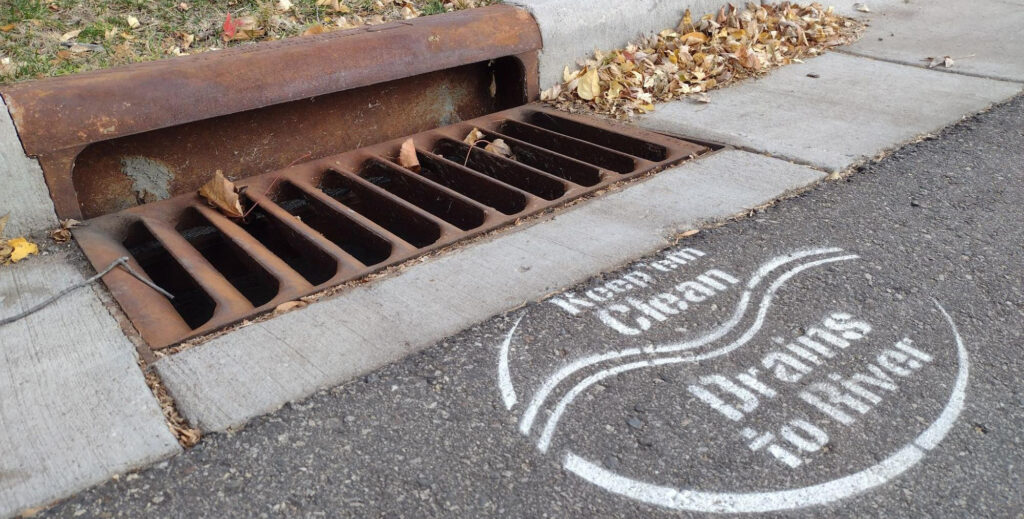
Streets connect to streams
Rain and melting snow wash pollutants off of rooftops, driveways, streets and lawns and into local wetlands, streams, lakes and rivers via storm sewer systems and roadside ditches. Keep chlorinated water out of our streets and out of our streams.
What do I do with filter and back wash waste?
Wastes from pool filters and back wash systems are not allowed in the storm sewer system. Backwash water needs to be directed to the sanitary sewer. Pool filters can be placed with your regular garbage.
Why should I be concerned?
Water from swimming pools and hot tubs (spas) often contains high levels of chlorine, bromine, and copper. It is also very corrosive due to low pH levels and may contain organic matter. If you discharge untreated pool or spa water into the street or local waters, you can kill fish and aquatic life. It is illegal to discharge chlorinated water to a municipal storm sewer system!
How can I get rid of chlorine?
Stop adding chlorine and leave the water exposed to the air for three to five days. The water will become naturally dechlorinated. You can also use de-chlorinating chemicals from a pool or spa supplier to remove the chlorine more quickly. Chlorine and pH test kits are available to test levels in water.
Can treated pool water be discharged to the storm sewer system?
Yes, but only if the water has been dechlorinated (to less than 0.1 mg/L of chlorine), has a pH range of 7-8, consists only of water, and is discharged in a way that does not cause nuisance conditions or erosion problems.
Can pool water be discharged to the sanitary sewer system?
Chlorine, in small amounts, is typically not a problem for municipal water plants. If you can easily discharge your pool or spa water to your private sanitary drain, residential and small pool and spa owners may discharge to the sanitary sewer. Large pool owners should contacts their city for approval, prior to discharging to the sanitary sewer.
Can I discharge my pool water into my yard?
Yes, but only if tests show that the water is de-chlorinated (to less than 0.1 mg/L of chlorine) has a pH of 7-8, and is free of other debris. The water should be directed onto a vegetated surface so that it soaks into the ground. The water should not flow onto any other person’s property or create nuisance conditions such as erosion or ponding for a prolonged period.
Other ways to keep our water clean:
- Don’t use yard fertilizers. If you do use fertilizers, do so sparingly, and opt for a phosphorus-free lawn fertilizer.
- Mow high and let it lie. Keep leaves and grass clippings in your yard and out of the street.
- Use a car wash or wash bay instead of your driveway to keep dirt, oil, and soap out of the storm drains.
- Pick up pet waste. Pet waste should always be picked up and disposed of in the trash, it may contain E. coli which contaminates the water and causes illness.
- Fix car leaks. Fix your car’s leaks and use care when fueling to avoid spills.
- Properly dispose of hazardous materials. Take paint, solvents, and cleaners to the Washington County hazardous waste facility.
Learn more about illicit discharge
Illicit discharge video by language:
- Spanish: https://youtu.be/vp3PNWmPSbk
- Somali: https://youtu.be/o9HyWIctQoo
- Hmong: https://youtu.be/Vd9rU6Uqfpc