

Goldfish (Carassius auratus) are an aquatic invasive species (AIS) that hurts water quality. It is critical that unwanted aquarium fish and plants are never dumped into lakes, creeks, or ponds.
Goldfish have been popping up in lakes and streams across the Twin Cities metro and surrounding suburbs in recent years. The problem comes from humans releasing unwanted pet fish, and is considered illegal fish stocking in the state of Minnesota.
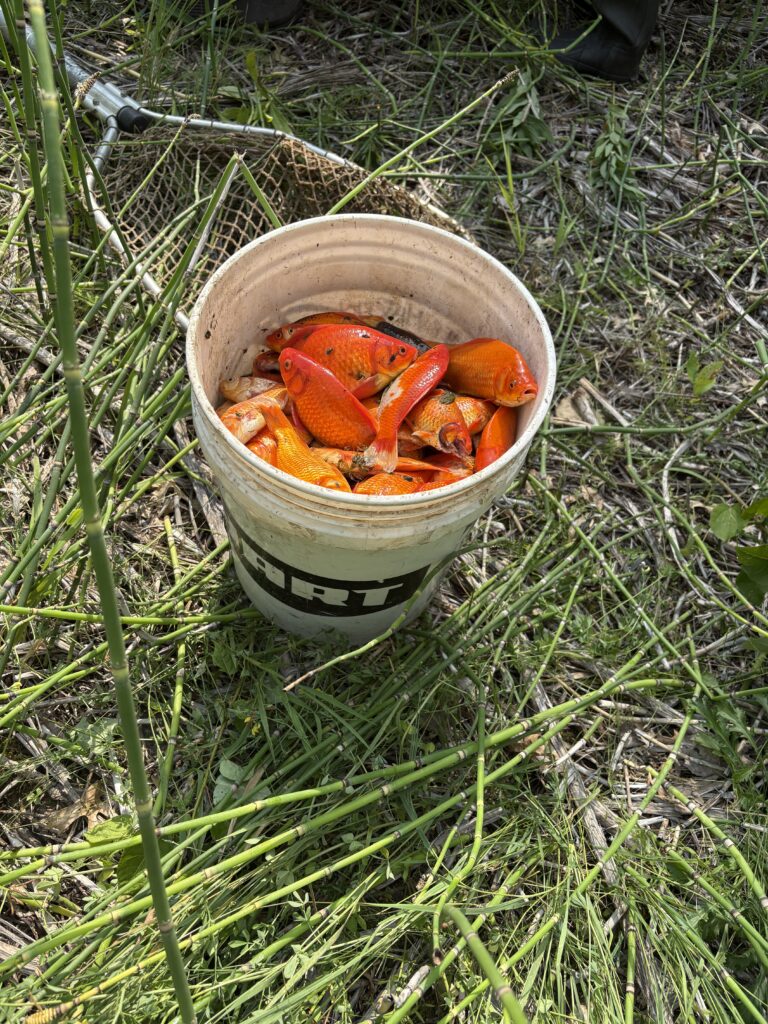
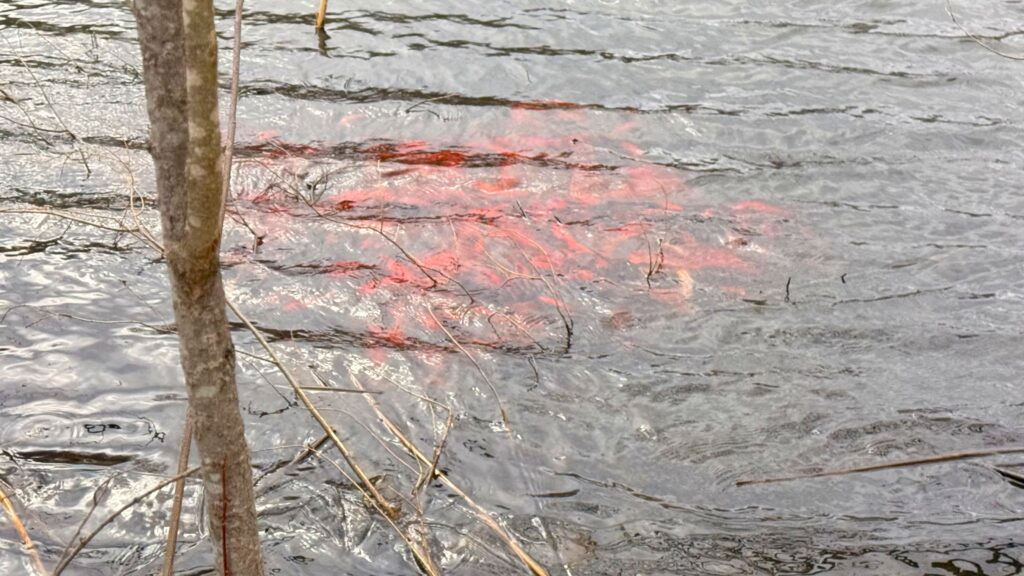
Locally, a large school goldfish was discovered in a stormwater pond connected to Powers Lake in Woodbury. This presents a major risk to the lake with the highest quality water in the watershed.
Impact on water quality
Goldfish are a species of carp. Just like carp, goldfish swim along the bottom of water bodies, stirring up sediment and releasing nutrients into the water column. This behavior creates cloudy water, and the nutrients released can cause algae blooms.
Goldfish are hardy. They tolerate turbid or cloudy water, temperature fluctuations, and low levels of dissolved oxygen (DO). Goldfish are very unlikely to be impacted by freezing winter-kills or sweltering summer-kills.
Can goldfish be removed once introduced?
Goldfish are difficult to remove once introduced. In the pond connected to Powers Lake, the city worked with the watershed district to remove goldfish using sonar, electrofishing, and baited box netting. However, all attempts were unsuccessful and the goldfish continued to reproduce rapidly. It was then that the City of Woodbury obtained a MNDNR permit for rotenone treatment. Rotenone is a naturally derived compound used by fisheries professionals to remove unwanted fish. It works on fish because it disrupts oxygen absorption through the gills. It does not work on animals that breath air, like people, pets, and other wildlife.
How can I help?
The most important thing is prevention, so please never dump unwanted goldfish into any waterbody. This includes lakes, streams, and neighborhood stormwater ponds.
Additionally, the District needs your help to spot goldfish. If you see goldfish out in the wild, take a picture if possible and report it. Contact the watershed district by email at [email protected] and tell us where, when, and approximately how many goldfish were seen.
Questions?
Contact Kyle Axtell, Planning & Projects Program Manager, at [email protected] or by phone at 651.728.6124.