
Campus Greening
Learn
Learning outside the classroom
The Campus Greening Program is a District-wide collaboration between SWWD and South Washington County School District that brings experiential learning to the campuses of six elementary and middle schools in ISD 833.
First hand learning
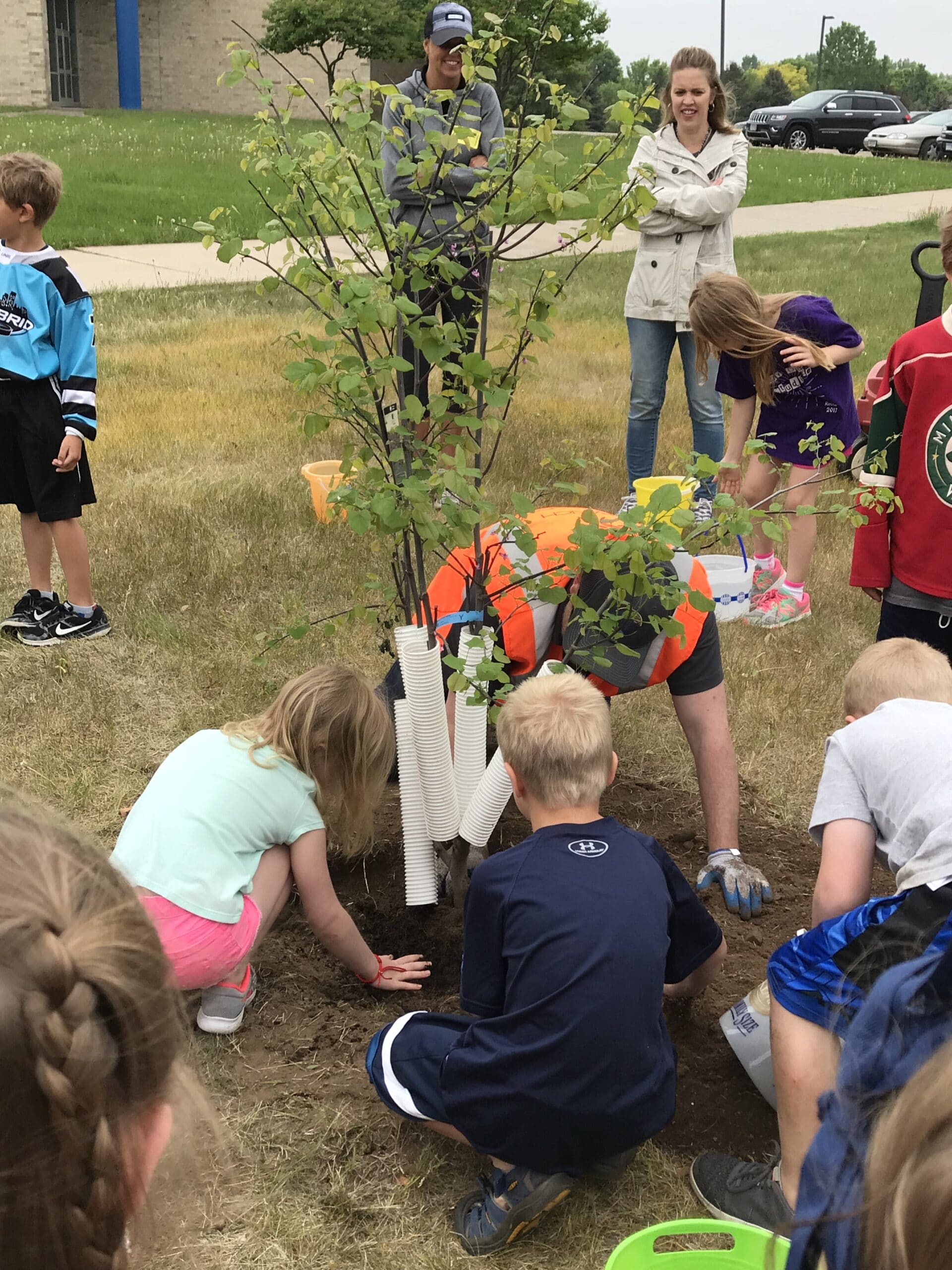
Campus Greening uses an ecosystem approach to addressing stormwater quality by expanding natural areas on campuses. As much as possible, students and staff are involved in the process of growing plants in the fall and planting them in the spring before the end of the school year.
Why are prairies important to stormwater? Simply put, deeper roots mean better infiltration. Prairie plants have deep and complex root systems that can burrow several feet into the ground. When compared to typical lawns, which only reach a few inches in depth. Native plants and their natural communities develop deep roots, build soils, and infiltrate stormwater where the rain falls right on campus.
But expanding natural areas doesn’t only benefit water quality. Minnesota is home to a wide range of beautiful flowers and attractive grasses, trees, and shrubs. By bringing back a range of native plants, other species that rely on these plants can find a home right on the campuses. Restoration of these natural ecosystems, especially close to home, offers a way for students to study nature close up, watching seasonal changes, and observe all of the richness of natural world interactions.
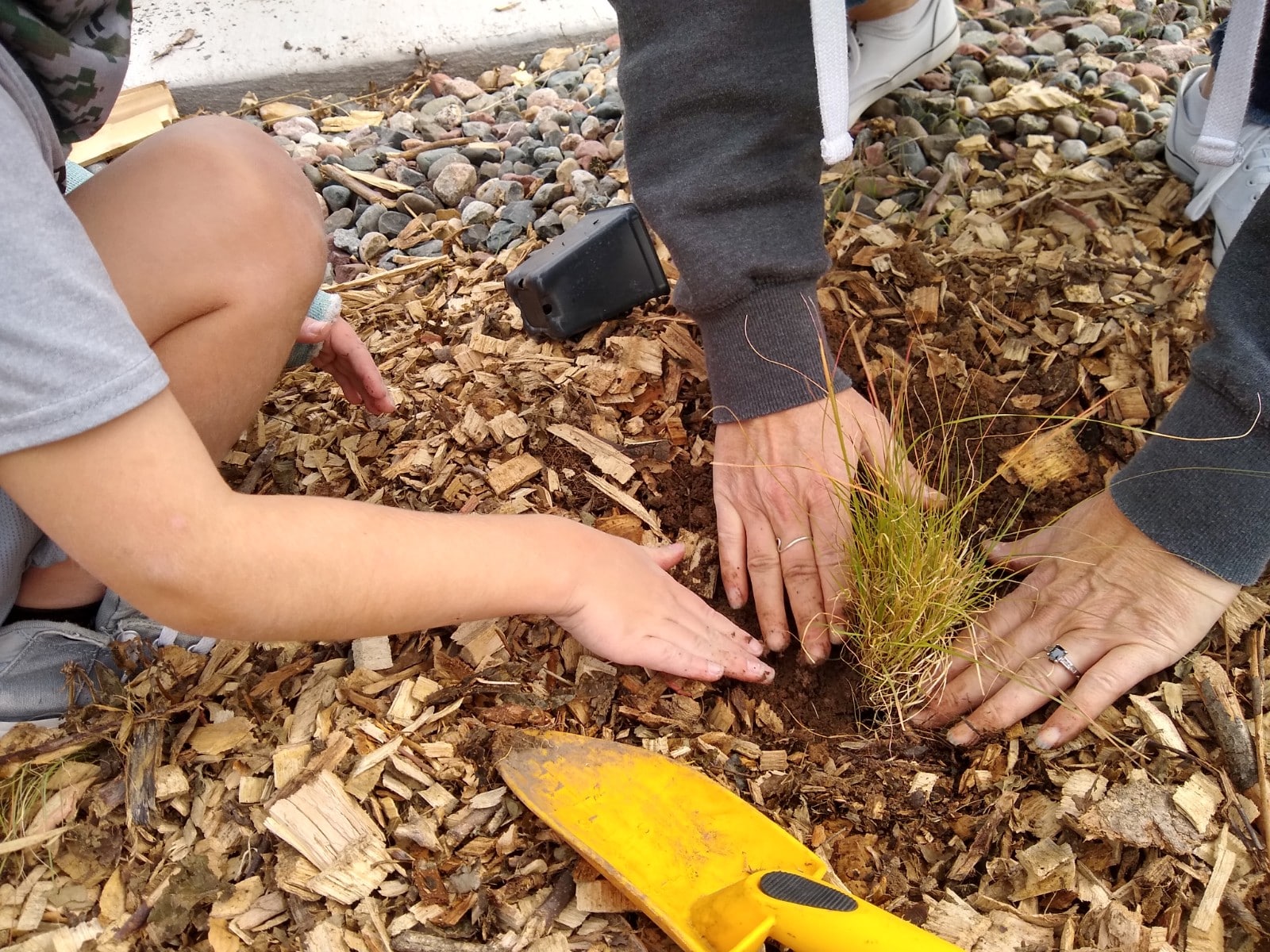
In the classroom, students plant seeds in the fall as they learn from existing science curriculum on plant growth, photosynthesis, and plant root systems. Over the year, the plants grow in the classroom, and students observe. Before the end of the school year, students head out to the prairie and plant their seedlings throughout the prairie and recap on the information they learned in the fall.
Lake Middle and Middleton Elementary
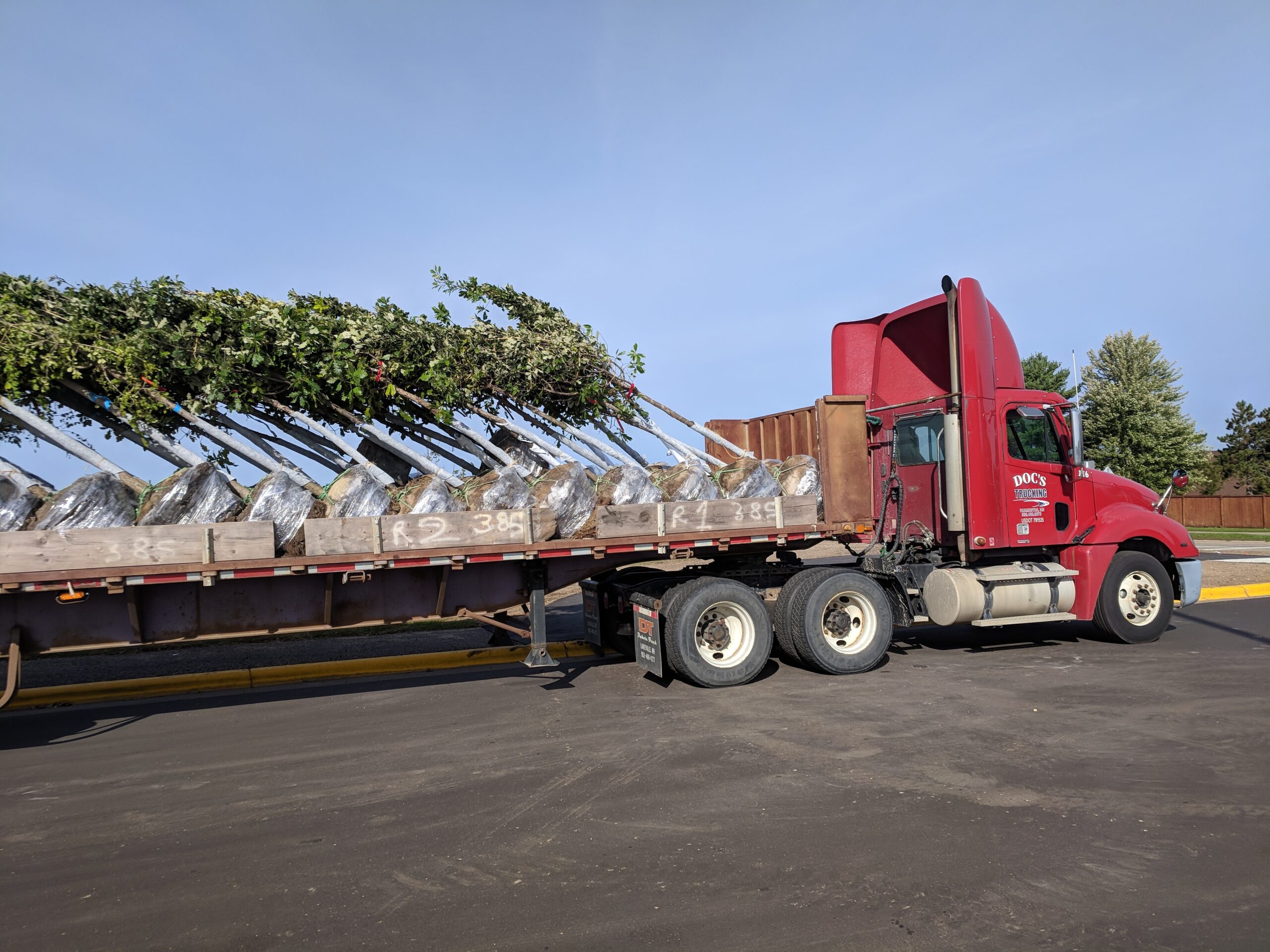
The Lake Middle School and Middleton Elementary School Campuses are several years into the restoration process, emerging from the “weedy” establishment period where prairie grasses and wildflowers are beginning to dominate the landscape. The combined schools have approximately 15 acres in active prairie restoration, 200 trees planted throughout the two campuses, and an outdoor classroom installed at each location.

Prescribed burns
Prescribed burns are used to reduce weeds and encourage prairie plants to thrive. Prescribed burning is an effective and historic practice of managing prairies, and is administered by a fully certified Burn Boss. Students regularly visit the outdoor classrooms, local scouts have helped move mulch into planting beds, and students at both schools planted gardens at the outdoor classrooms.
Valley Crossing Elementary School
At Valley Crossing Elementary School in Woodbury, the prairie enhancement project used a variety of techniques to enhance the existing prairie along the northern and eastern borders of the campus. Controlled burns in spring or fall benefit the prairie by helping to reduce weed species, clear away thatch, and offer a more diverse mix of species to take advantage of increased light. The existing prairie contains a wide range of plant species native to Minnesota’s prairies and offers abundant habitat for pollinators and habitat for a wide range of other species.
Turf to Savanna Conversion
Large areas of turf on the Valley Crossing Campus are unused by students, require frequent maintenance like mowing, watering, fertilizers, herbicides, and provide little habitat or stormwater benefit. Conversion of these areas to native savanna provides a range of ecosystem improvement and, by extension, offers great hands-on learning opportunities for students.

Outdoor Classroom
In the summer of 2021, the outdoor classroom was installed immediately adjacent to the southeast corner of the school building. This amphitheater-type space has been designed to use rough, natural stone benches and a stabilized granite path to provide accessibility for all users. The outdoor classroom is nestled into the surrounding restored savanna plantings, offering students and teachers the opportunity to engage in hands-on environmental learning right outside the classroom door.


Crestview Elementary School
At Crestview Elementary School in Cottage Grove, large areas of turf on the campus were converted to prairie. Through conversations with Crestview Elementary teachers, it was revealed that the existing turf provided minimal value for students, required frequent maintenance, and provided little habitat or stormwater benefit. Restoring these areas to natural communities provides a range of ecosystem services and offers hands-on learning opportunities for Cottage Grove students.
Campus Outdoor Laboratory
The north end of the Crestview Elementary campus contains about 7.5 acres of degraded woodland and grassland overgrown by shrubs. The topography of this area was heavily altered when the campuses were built in the 1960s, and vegetation is a mix of planted conifers and adventitious deciduous trees and shrubs.

The area has great potential for the restoration of a variety of native plant communities. Prairie and savanna are planned on the top of slopes where soils are well drained and runoff is high. Dry woodland is appropriate on mid-level and upper slopes, as well as acting as a buffer on the north property boundary. Lower areas offer the opportunity to restore lowland hardwood and shady sedge meadows. A restoration of this type requires multiple years of implementation using a variety of techniques that may include cutting and treating of woody species, controlled burns, grazing by goats, tree planting, and large-scale seeding.

Tony Randazzo
Staff Contact
Questions? Reach out to Tony Randazzo, Senior Restoration Ecologist, at Tony.Randazzo@swwdmn.gov or call 651.728.6952.