
Bailey School Forest Park Restoration
Restoring open spaces
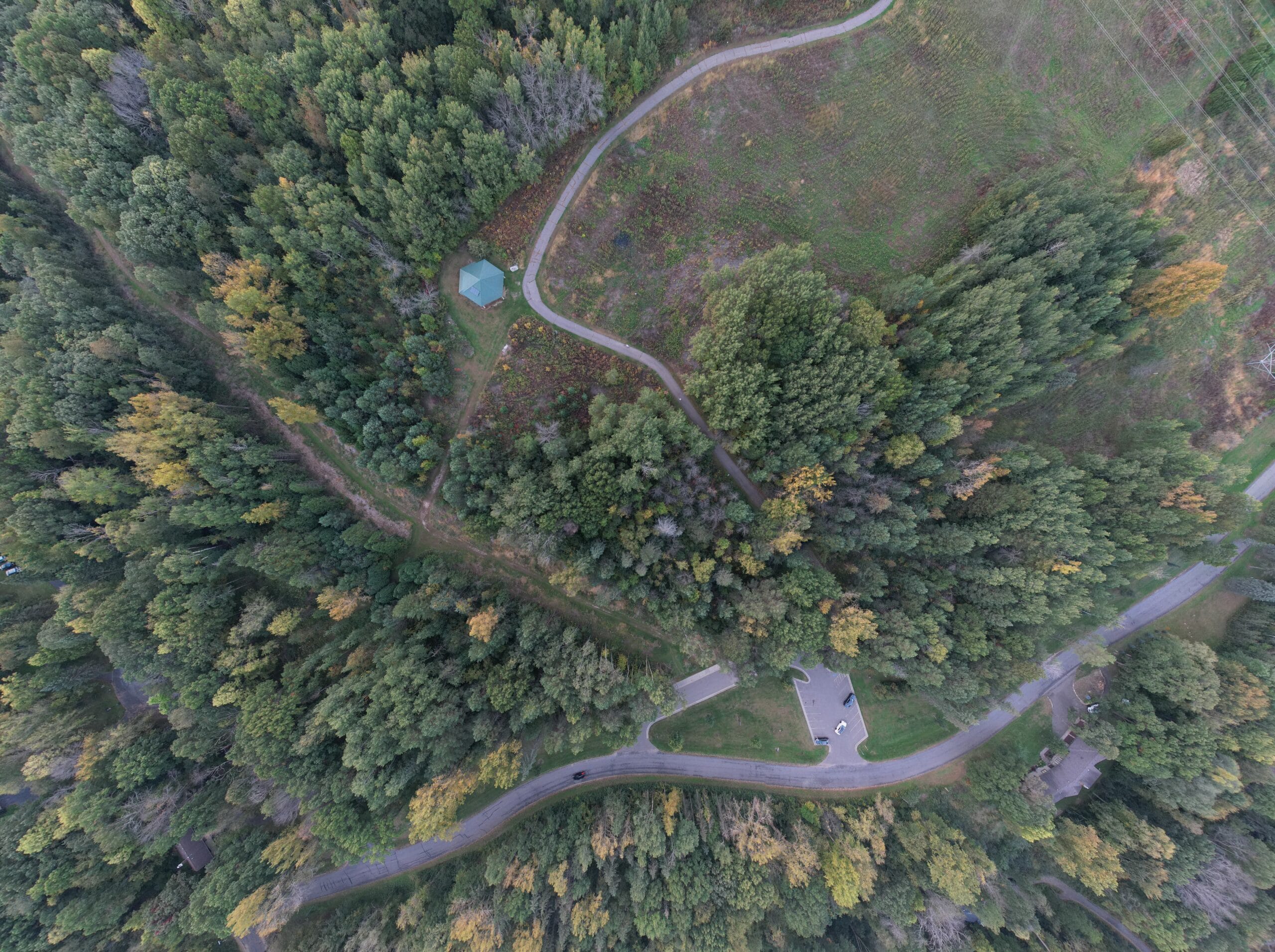
The Bailey School Forest Park sits along the Mississippi River bluffs in Newport. It has provided an educational opportunity for students throughout the local school district. Over time, the area has become dominated by invasive and non-native species. To restore educational and environmental value, the SWWD is conducting a restoration project.
Forest history
Bailey School Forest Park (BSFP) is a 60-acre city park located on the bluffs above the Mississippi River Valley in Newport. The park has a mix of oak forest, oak savanna, and prairie landscapes.
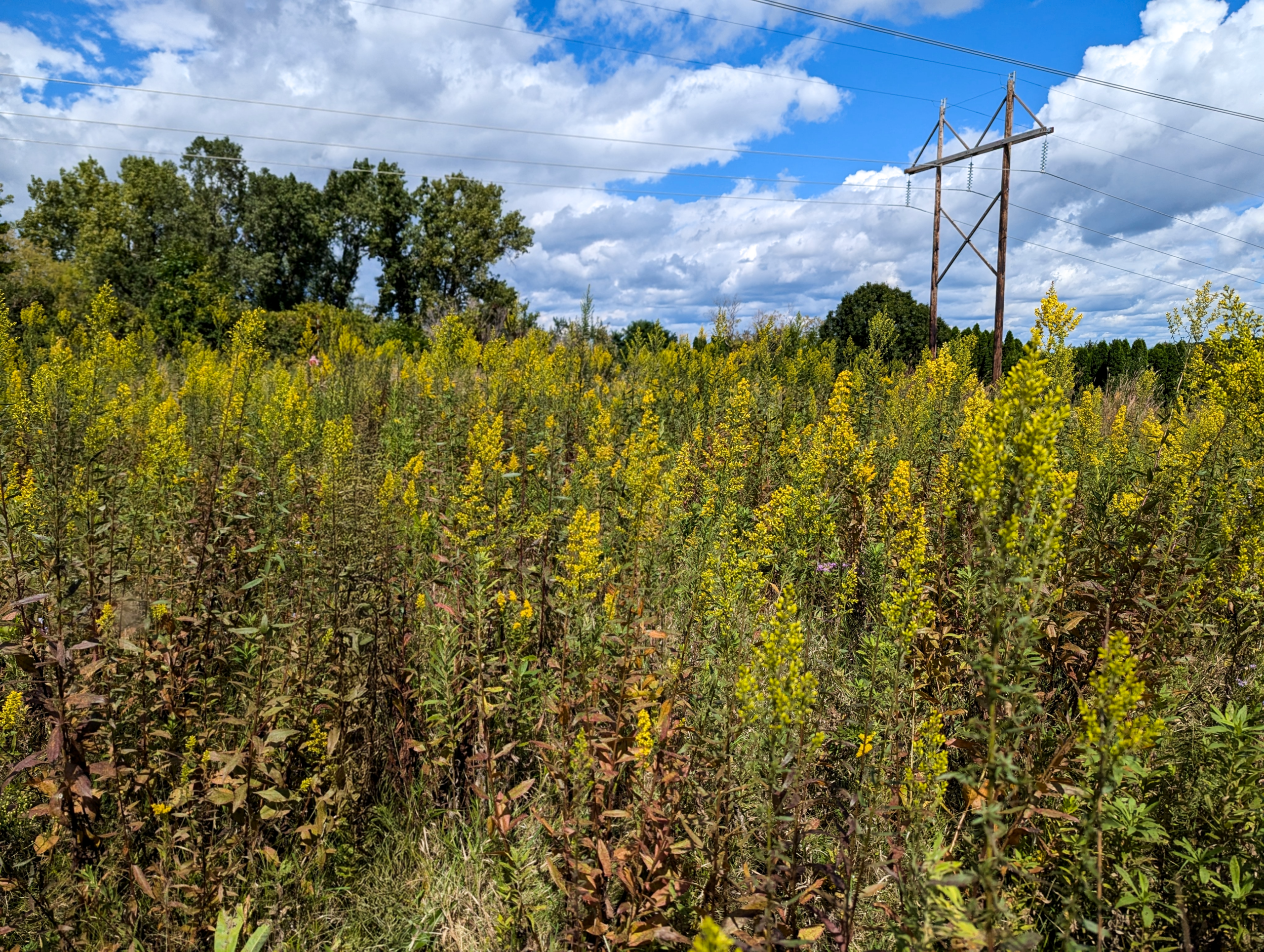
For years, the park has provided outdoor learning opportunities for SoWashCo students; and is recognized as a official School Forest by the Minnesota DNR. In 2012, the park was dedicated to Mike Phillips, who lead the creation of the park in 1993. Since its dedication, the park has hosted over 30,000 District #833 students.
Over the years, the grassland, woodlands, and forest, have become dominated by invasive and non-native species. To maintain its educational and environmental value, a restoration is being conducted. The SWWD and City of Newport will collaborate with state and local partners to complete the project. The goal is to transform the parks wooded areas into thriving, natural plant communities, that support native wildlife, soil ecosystems, and healthy waters.
Habitat restoration
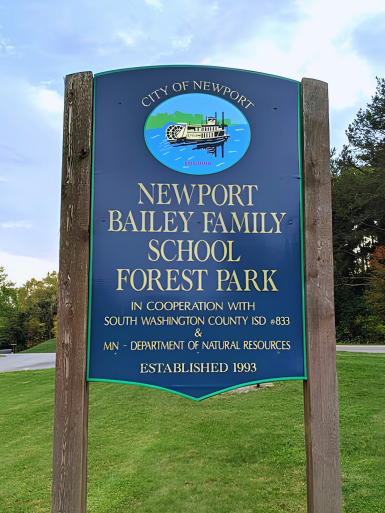
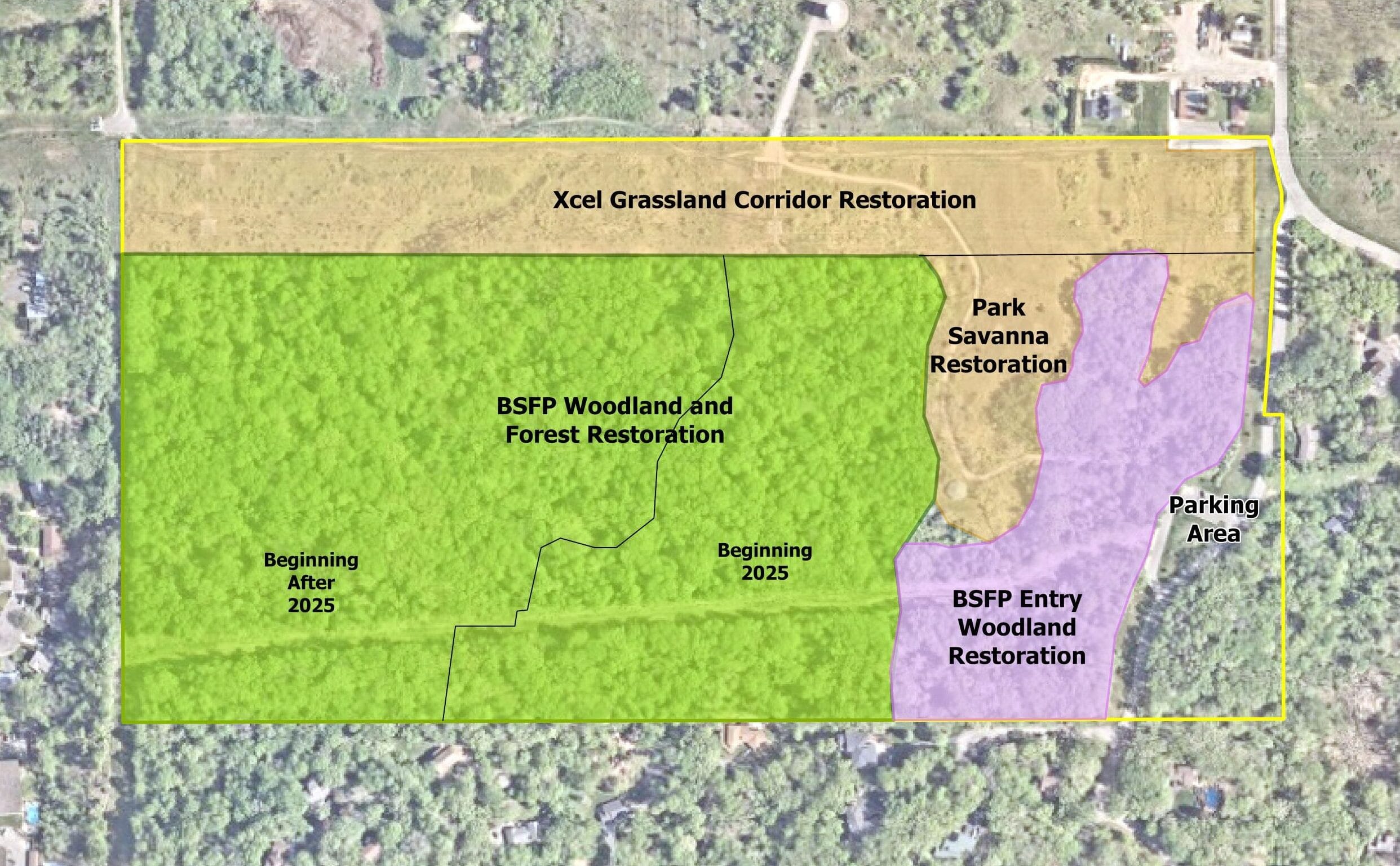
For the restoration, the project was broken down into phases. Phase one began in 2024 with around 20 acres of prairie near the large transmission lines. Woody vegetation can be a potential hazard to utility operations. To mitigate this, project partners have committed to a restoration with minimal trees and shrubs in that area. The prairie restoration focuses on grassland habitat, and biodiverse native grasses and flowers.
The BWSR Habitat Friendly Utilities Program connects utility companies and conservation partners. The programs aims to maintain safety, while also enhancing landscape health and biodiversity in utility corridors. The SWWD is participating in this program for this project.
A combination of mowing, herbicide, prescribed fire, and reseeding will prepare the site. After the initial restoration, Newport city staff will continue to manage the site.
Improving habitat and beauty in a woodland park entry
In 2025, SWWD and the City of Newport began work to improve 9-acres of habitat near the entry of the park. This phase of the project was funded by Minnesota DNR Conservation Partners Legacy program funding. The area is a mixed forest with a heavy shrub layer of mostly native and non-native species. Some parts see bare soil and heavy understory shade. Non-native species are abundant or dominate throughout the site. Non native species are harmful in the ways invasive species can be. But, non native species provide less variety of native plants that animals rely on. In some areas, non-native conifers are planted too closely, and without maintenance, have become unhealthy. Heavy shade limits the potential for natural conversion to a native oak-dominated community. Due to the competition and shading, oaks planted in the past have not reached maturity. Moreover, there are areas of bare soil, which is a concern for water quality and sediment loss.
There has been great success with other multi-year conversion. The combination of forestry mowing and grazing can severely weaken undesirable woody vegetation. Forestry mowing is done by qualified native plant contractors. These individuals will leave desirable woody native species, while clearing the thick shrub layer. Forestry mowing will take place in the winter while the ground is still frozen to protect the soil. Following the winter mow, a second mow and goat grazing is planned. The approach of continually weakening the plants minimizes the use of herbicides. The site will be reseeded over the course of the restoration to bring back a diverse ground layer of native grasses, sedges, and flowers.
The project offers educational opportunities for local students to participate in the restoration. Students will participate in “seed rains”, or overseeding in succession. Once the invasive species are under control, students and the SWWD will begin to replate trees.
Opening up the woodland
Restoration will also occur in the 40-acre woodland area of the park. Work began in the winter of 2025 into 2026 to remove the dense buckthorn understory. This area is distinct from the park entry restoration, and contains many healthy native oak trees. To support this area, some thinning of the canopy is needed. This allows more sunlight to enter the woods, and encourage the growth of native understory plants. To complete this, hand cutting, treating, and forestry mowing in dense buckthorn patches will be used. Additional selective thinning of the canopy will encourage the growth of native trees typical of a Oak Savanna and Oak Forest like this one. Oak trees impacts by Oak Wilt have been found and will require removal to prevent spreading. Ash trees impacted by Emerald Ash Borer have been removed in the past. The gaps left by the removal of trees will support the overall restoration.
What is Oak Wilt?
Oak Wilt is a fungal disease which blocks water flow inside the tree. Oak Wilt impacts all species of oaks found in Minnesota. The disease is caused by an invasive fungus called Bretziella fagacearum. Depending on the oak type, death can occur anywhere from 2 months to 20 years once infected.
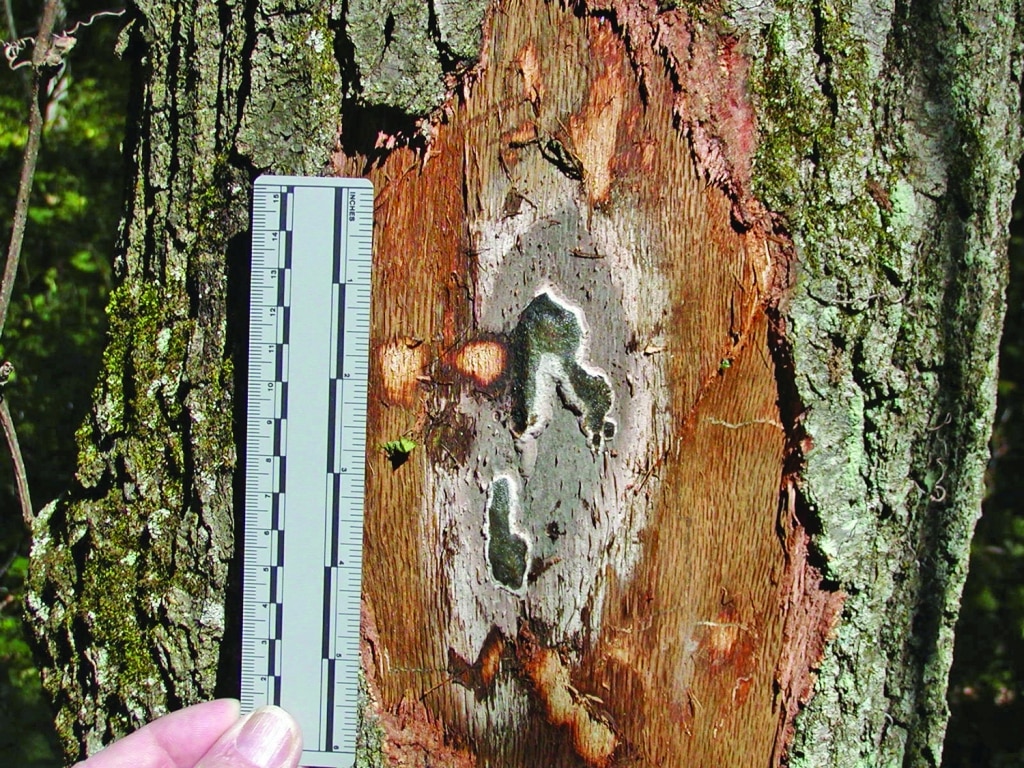
This work is funded in majority by the State of Minnesota Outdoor Heritage Fund and work is conducted in collaboration with Great River Greening.
Tackling biomass waste
During a land restoration project, a large amount of biomass waste is generated. Typically, the waste is disposed of through open-pile burning. This process releases greenhouse gases that contribute to climate change, and degrade air and soil quality.
Biochar is a low-carbon alternative to open-pile burning. Biochar reduces greenhouse gases, air pollution, and minimizes soil damage where the burn takes place. The charcoal that is produced during a biochar burn is different than typical charcoal. Sometimes described as “supercharged charcoal” it is a form of carbon sequestration. This process can lock up to 80% of carbon produced into a solid form, preventing it from re-entering the atmosphere as carbon dioxide.
Learn about how biochar works to reduce greenhouse gas emissions
Goats and restoration
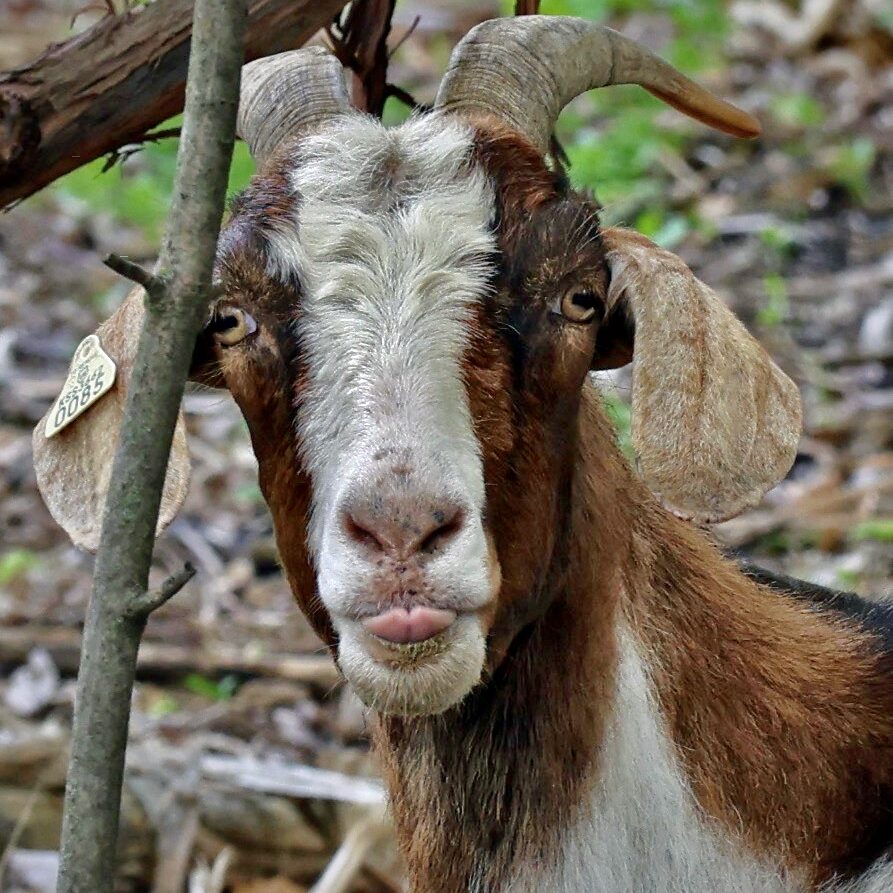
Simply put, goats are eating machines. Goats are willing to eat just about anything in their path, making them a powerful (and adorable) partner in the restoration process.
When goats graze, the plant is prevented from getting any bigger or spreading. Goats are fast and agile, and can access and clear land that human hands or machinery cannot get to. Goats also help with the problem of biomass waste. To a goat, a restoration site is like an all-you-can-eat buffet!
Tony Randazzo
Staff Contact
Questions? Reach out to Tony Randazzo, Senior Restoration Ecologist, at Tony.Randazzo@swwdmn.gov or call 651.728.6952.