
Armstrong Lake Cattail Harvest
Project Overview
Testing cattail harvest for cleaner water
The question: Can harvesting invasive cattails help improve water quality?
In 2025, South Washington Watershed District launched a pilot project at Armstrong Lake to find out. The project tested whether removing invasive hybrid cattails (Typha × glauca) from a large wetland upstream of the lake could provide a practical, cost-effective way to remove phosphorus, chloride, and other pollutants from the watershed.
The pilot produced promising results. Harvesting approximately 0.4 acres of cattails removed up to 28 pounds of phosphorus and approximately 352 pounds of chloride from the wetland system.
The study also found that harvest timing makes a significant difference. Cattails collected during the late growing season contained substantially more phosphorus and chloride—and far more total biomass—than cattails sampled during winter.
These findings are helping SWWD evaluate whether targeted cattail harvesting could become another tool for improving water quality throughout the watershed.
The project was led by SWWD with guidance from Barr Engineering Co. and field assistance from Washington Conservation District and Conservation Corps Minnesota & Iowa.
The challenge at Armstrong Lake
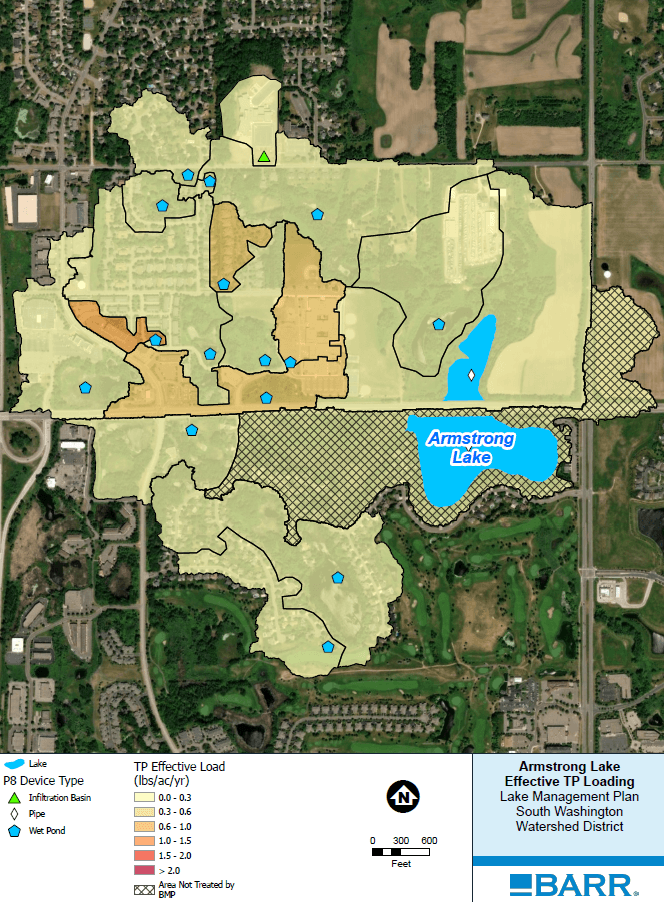
Armstrong Lake is a shallow lake located in Oakdale and Lake Elmo. Its southern basin covers approximately 22.7 acres, but only about 10 acres typically exhibit open-water conditions during the growing season. The lake reaches a maximum depth of approximately 5.5 feet.
Because the lake is small and shallow, even relatively modest phosphorus inputs can contribute to nuisance algae and poor water quality. Summer phosphorus concentrations typically range from 60–100 micrograms per liter (µg/L), compared with the regional water quality standard of 40 µg/L.
Water clarity is also affected by continual mixing and resuspension of sediment from the shallow lake bottom.
Chloride is another growing concern. Concentrations in Armstrong Lake have increased over the past two decades from approximately 54 mg/L to 202 mg/L, approaching Minnesota’s chronic chloride standard of 230 mg/L.
Opportunities to construct new stormwater treatment practices around the lake are limited because much of the surrounding watershed is already developed.
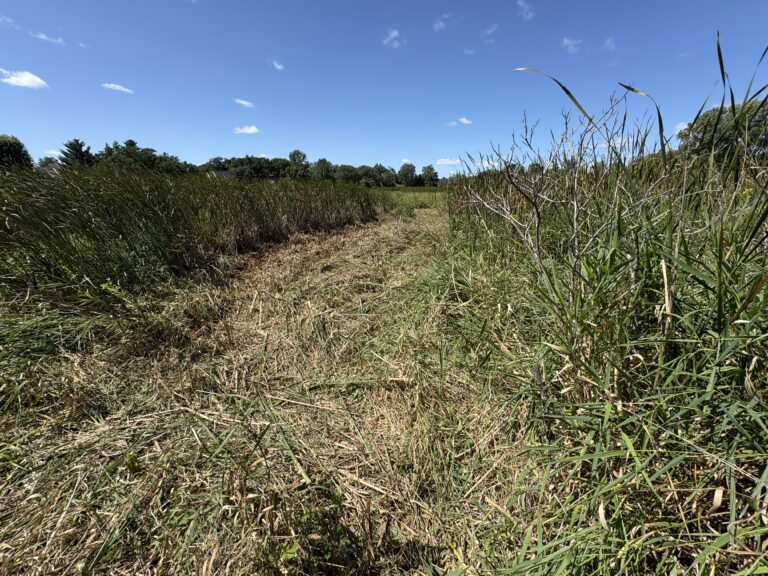
Immediately west of Armstrong Lake, however, is a 21-acre wetland. Approximately 11.2 acres are dominated by invasive hybrid cattails, and roughly 300 acres of Armstrong Lake’s 572-acre watershed drain through this wetland before reaching the lake.
That presented an opportunity to test a different approach.
Why harvest cattails?
Cattails absorb nutrients and other elements from the water and sediment as they grow, storing them in their stems, leaves, and roots.
When the plants die back, some of those nutrients remain in the wetland system and can eventually be released again through decomposition and other natural processes.
Harvesting cattails before they die back removes those nutrients and salts from the wetlands.
Previous studies suggested that cattail harvesting could be especially useful for removing phosphorus. Earlier SWWD planning studies estimated that harvesting the Armstrong Lake wetland could remove approximately 40 pounds of phosphorus during a winter harvest or as much as 350 pounds during the growing season.
The 2025 pilot allowed SWWD to test those assumptions using local field data.

How the pilot was conducted
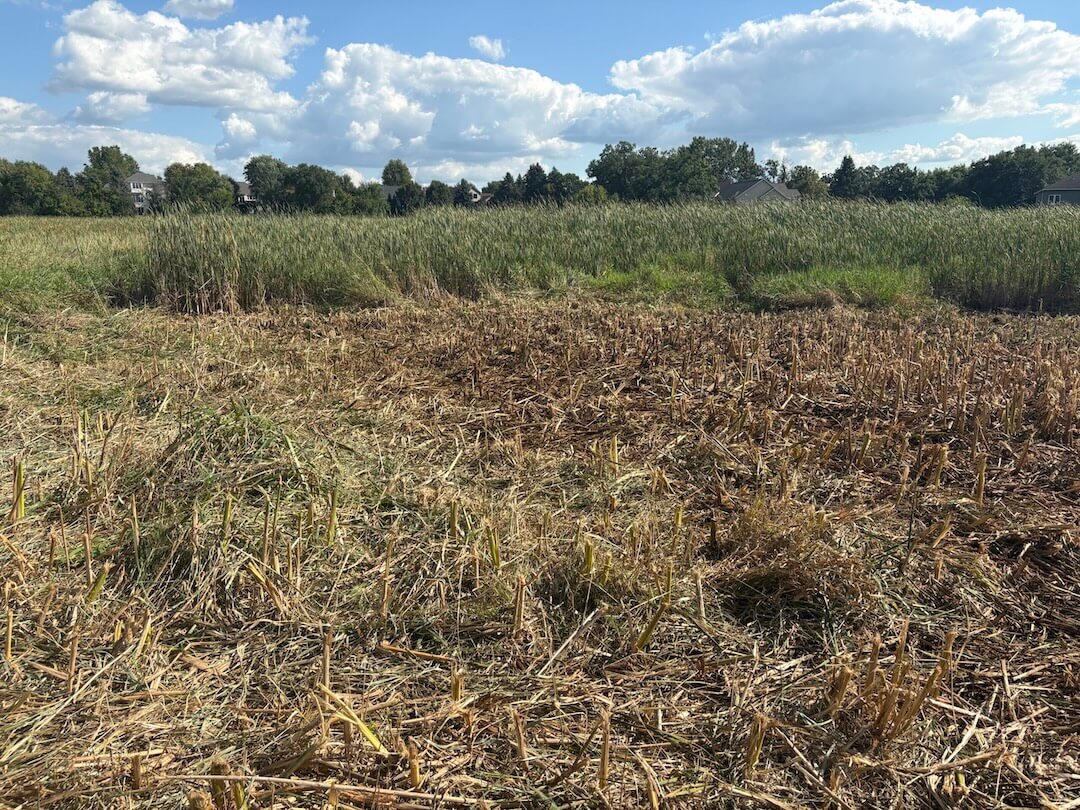
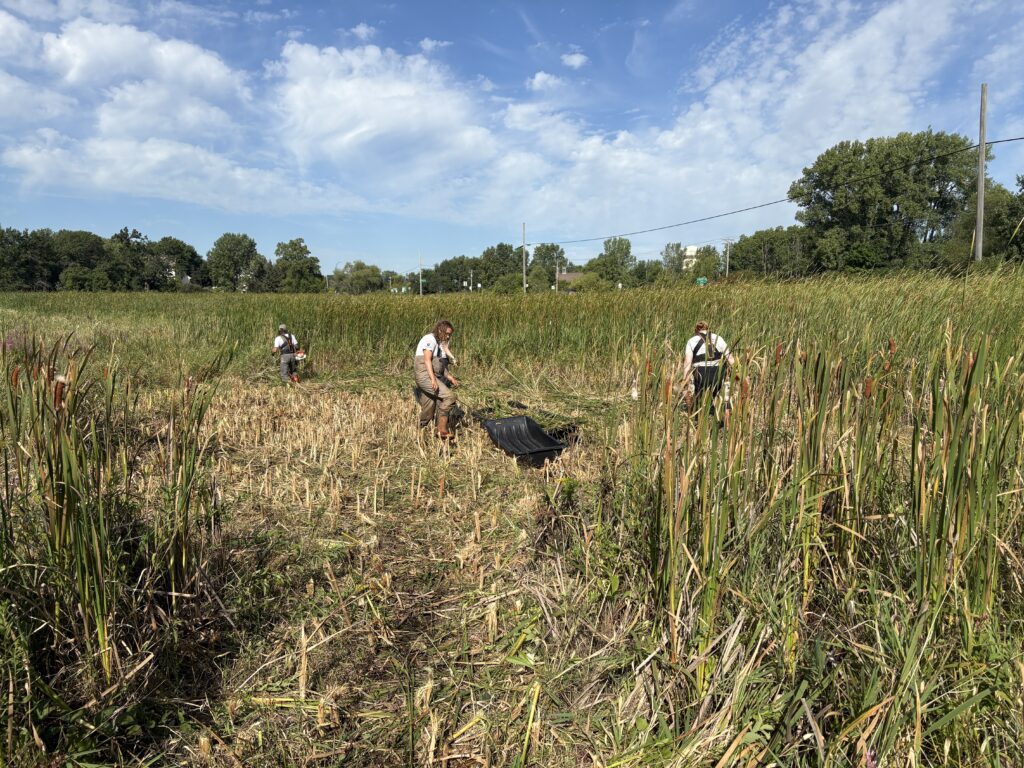
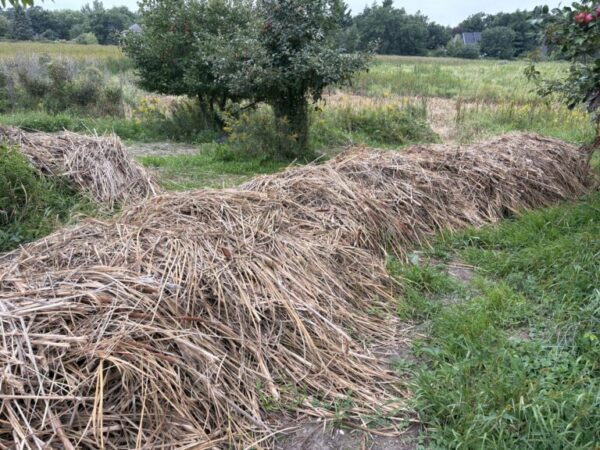
From August 25–28, 2025, crews from Washington Conservation District and Conservation Corps Minnesota & Iowa manually harvested cattails from approximately 0.4 acres of wetland. Crews used hand-operated brush cutters and weed whips to cut cattail stalks above the water line, then transported the plant material by sled to a nearby upland staging area. After drying for approximately two weeks, the harvested material filled about 30 cubic yards and was transported to a commercial composting facility.
Sampling and laboratory analysis
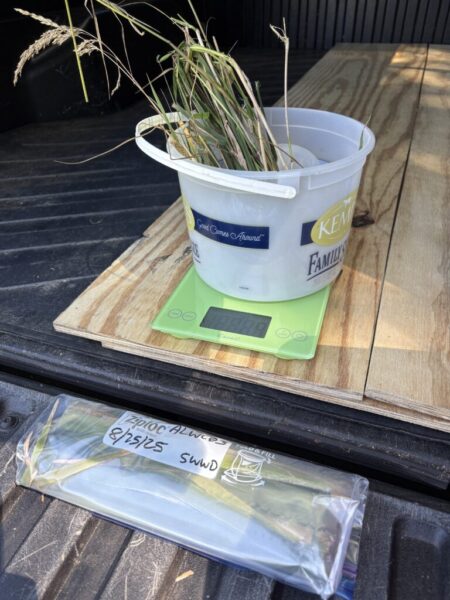
SWWD collected eight representative cattail samples during the August harvest, including both flowering and non-flowering plants. Leaves, stems, and flowering structures were included so laboratory results would represent the entire harvested plant.
Samples were analyzed by the University of Minnesota Research Analytical Laboratory for a variety of elements and nutrients, with particular attention to:
- Total phosphorus
- Chloride
- Nitrate-nitrogen
SWWD also completed stem-count surveys to estimate cattail density and total biomass throughout the harvestable portion of the wetland.
In February 2026, six additional cattail samples were collected and analyzed using the same methods. These samples allowed researchers to compare late-growing-season and winter harvesting and estimate how much nutrient mass is lost from the plants through seasonal dieback.
What we learned
1. A large amount of cattail biomass is present
Stem-count surveys found an average of 17.6 cattail stems per four square feet.
Across the 11.2-acre cattail-dominated portion of the wetland, SWWD estimated approximately 2.1 million cattail stems.
Estimated total biomass also changed dramatically by season:
- Growing season: approximately 187 tons of wet cattail biomass
- Winter: approximately 73 tons of dry cattail biomass
That seasonal loss of plant material is one reason harvest timing has such a large effect on pollutant removal.
2. Phosphorus removal exceeded previous estimates
The pilot showed that cattail harvesting can remove a meaningful amount of phosphorus from the wetland.
During the 0.4-acre pilot harvest, crews removed up to 28 pounds of phosphorus in cattail biomass.
Laboratory testing found that growing-season cattails contained an average of about 0.21% phosphorus by mass. Using the pilot results and estimated cattail biomass across the full 11.2-acre cattail-dominated area, researchers estimated that harvesting the entire area during the growing season could remove approximately 788 pounds of phosphorus, with an estimated range of 456 to 1,214 pounds.
A winter harvest would remove considerably less. Based on winter biomass and phosphorus concentrations, a full winter harvest was estimated to remove approximately 184 pounds of phosphorus.
These estimates are substantially higher than earlier SWWD planning assumptions and suggest that growing-season harvesting could remove substantially more phosphorus from the wetland than previously expected.
3. Cattails stored large amounts of chloride
One of the study’s notable findings was the amount of chloride stored in cattail biomass. During the 0.4-acre pilot harvest, crews removed approximately 352 pounds of chloride from the wetland.
Laboratory testing found that growing-season cattails contained an average of about 2.64% chloride by mass. Using the pilot results and estimated cattail biomass across the full 11.2-acre cattail-dominated area, researchers estimated that harvesting the entire area during the growing season could remove approximately 4.9 tons of chloride, with an estimated range of 3.8 to 6.0 tons.
Winter harvesting would remove considerably less. A full winter harvest was estimated to remove approximately 0.86 tons of chloride.
Because chloride does not break down naturally and can accumulate in lakes and groundwater over time, these findings suggest cattail harvesting may offer an additional way to remove chloride from the watershed.
4. Nitrate removal was minimal
The study also analyzed nitrate-nitrogen.
Unlike phosphorus and chloride, relatively little nitrate was stored in the cattail biomass. A full growing-season harvest was estimated to remove only about 3 pounds of nitrate-nitrogen.
For this site, the primary water quality value of cattail harvesting appears to be associated with phosphorus and chloride removal rather than nitrate removal.
What does this mean for Armstrong Lake?
Those numbers require an important distinction.
Removing 788 pounds of phosphorus from wetland vegetation would not mean 788 fewer pounds of phosphorus entering Armstrong Lake.
Current lake modeling estimates that the surrounding watershed contributes approximately 17–65 pounds of phosphorus to the lake annually, depending largely on precipitation.
Instead, the potential long-term benefit comes from changing how phosphorus moves through the wetland.
By repeatedly removing nutrient-rich plant biomass and encouraging new cattail growth, harvesting may help return the wetland to a stronger phosphorus sink—a landscape feature that captures and stores phosphorus rather than allowing more of it to move downstream.
Because approximately half of Armstrong Lake’s watershed drains through this wetland, even a partial reduction in phosphorus transport could provide a meaningful water quality benefit.
Growing-season or winter harvest?
From a pollutant-removal perspective, harvesting during the late growing season provides the greatest benefit.
Based on the pilot data, a winter harvest may remove only about 20–25% as much phosphorus and chloride as a late-growing-season harvest. But pollutant removal is only one consideration. A winter harvest conducted under strong frozen conditions could reduce disturbance to wetland soils, vegetation, and wildlife habitat. Frozen ground may also make it easier for harvesting equipment to operate within the wetland.
Growing-season harvesting provides greater pollutant removal but may require specialized amphibious equipment and careful timing to avoid disturbing wildlife or mobilizing nutrient-rich wetland sediment.
SWWD will continue evaluating these tradeoffs as it considers future harvesting approaches.
Want the complete science behind the study?
The full pilot study includes detailed field methods, laboratory procedures, biomass calculations, phosphorus and chloride data, cost estimates, figures, references, and discussion of future harvesting strategies.
Could cattail harvesting become a water quality practice?
The pilot demonstrated that targeted cattail harvesting can physically remove measurable amounts of phosphorus and chloride from the Armstrong Lake watershed. Scaling the practice up presents additional questions.
A full wetland harvest using manual labor would not be practical. Mechanical harvesting would require specialized equipment capable of operating safely in wet conditions while minimizing disturbance to wetland soils and wildlife habitat.
Based on the pilot results, SWWD sees particular potential in targeted manual harvesting during the growing season.
For example, the study estimates that a one-week targeted manual harvest could conservatively remove about 20 pounds of phosphorus at an estimated crew and disposal cost of approximately $6,200, or about $310 per pound of phosphorus removed.
Rather than treating cattail harvest as a one-time construction project, SWWD is considering whether it could function as an ongoing operational best management practice—similar to street sweeping or other recurring water quality maintenance activities.
More than water quality
Reducing pollutants may not be the only benefit. Dense stands of invasive narrowleaf and hybrid cattails can reduce plant diversity within wetlands. Carefully managed harvesting could create opportunities for a wider variety of native wetland plants to establish and improve habitat conditions. SWWD will monitor the pilot area to see how the vegetation community responds over time.
Future study will also consider:
- The feasibility and cost of larger-scale harvesting
- Potential impacts to wetland soils and wildlife
- The best seasonal timing and harvesting equipment
- How repeated harvesting affects phosphorus movement to Armstrong Lake
- Whether targeted harvests can be sustained as an operational water quality practice
- How harvested cattail biomass could potentially be reused
- Whether other pollutants present in harvested biomass would limit reuse options
Learn more
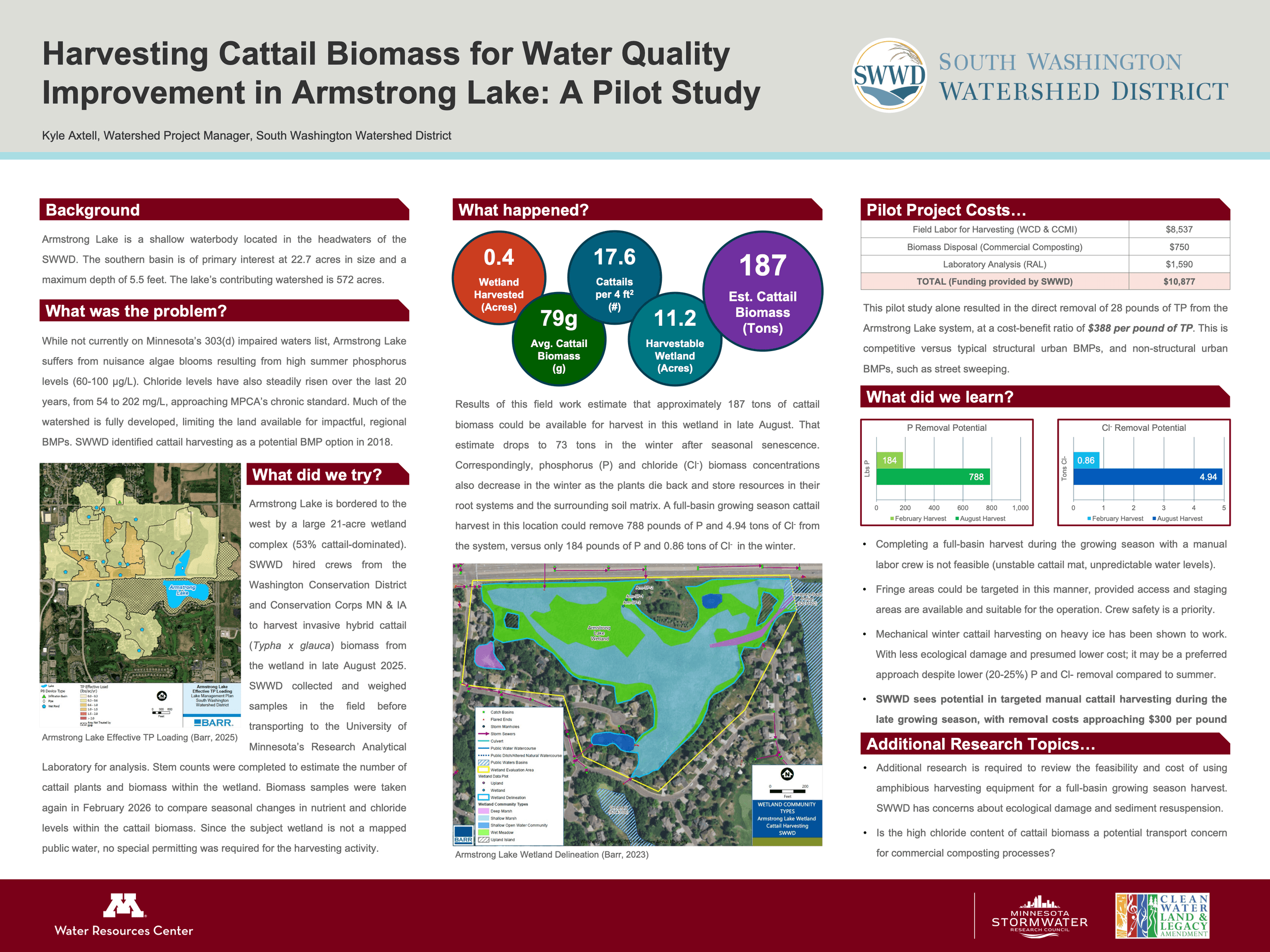
DOWNLOAD: Harvesting Cattail Biomass for Water Quality Improvement in Armstrong Lake — A Pilot Study
References:
Barr Engineering Co. Northern SWWD stormwater best management practices feasibility study. South Washington Watershed District. March 2019.
Barr Engineering Co. Cattail harvesting program feasibility – Phase 1. South Washington Watershed District. August 2022.
Barr Engineering Co. Wetland Delineation Report: Armstrong Lake Wetland Cattail Harvesting. South Washington Watershed District. June 2023.
Barr Engineering Co. South Washington Watershed District Lake Management Plan. South Washington Watershed District. December 2025
Grosshans, R.E., et. al. Cattail farming for water quality: Harvesting cattails for nutrient removal and phosphorus recovery in the watershed. Nutrient Recovery and Management. Water Environment Federation. 2011.
South Washington Watershed District. Armstrong Lake Subwatershed Retrofit Analysis. September 2018.
Svedarsky, D., et. al. Cattail Management in the Northern Great Plains: Implications for Wetland Wildlife and Bioenergy Harvest. University of Minnesota Northwest Research and Outreach Center. 2016.

Kyle Axtell
Staff Contact
Questions? Reach out to Kyle Axtell, Planning & Projects Program Manager, at Kyle.Axtell@swwdmn.gov or call 651.728.6124.