
Wilmes Lake Alum Treatment Facility
Project Overview
A new way to approach water quality
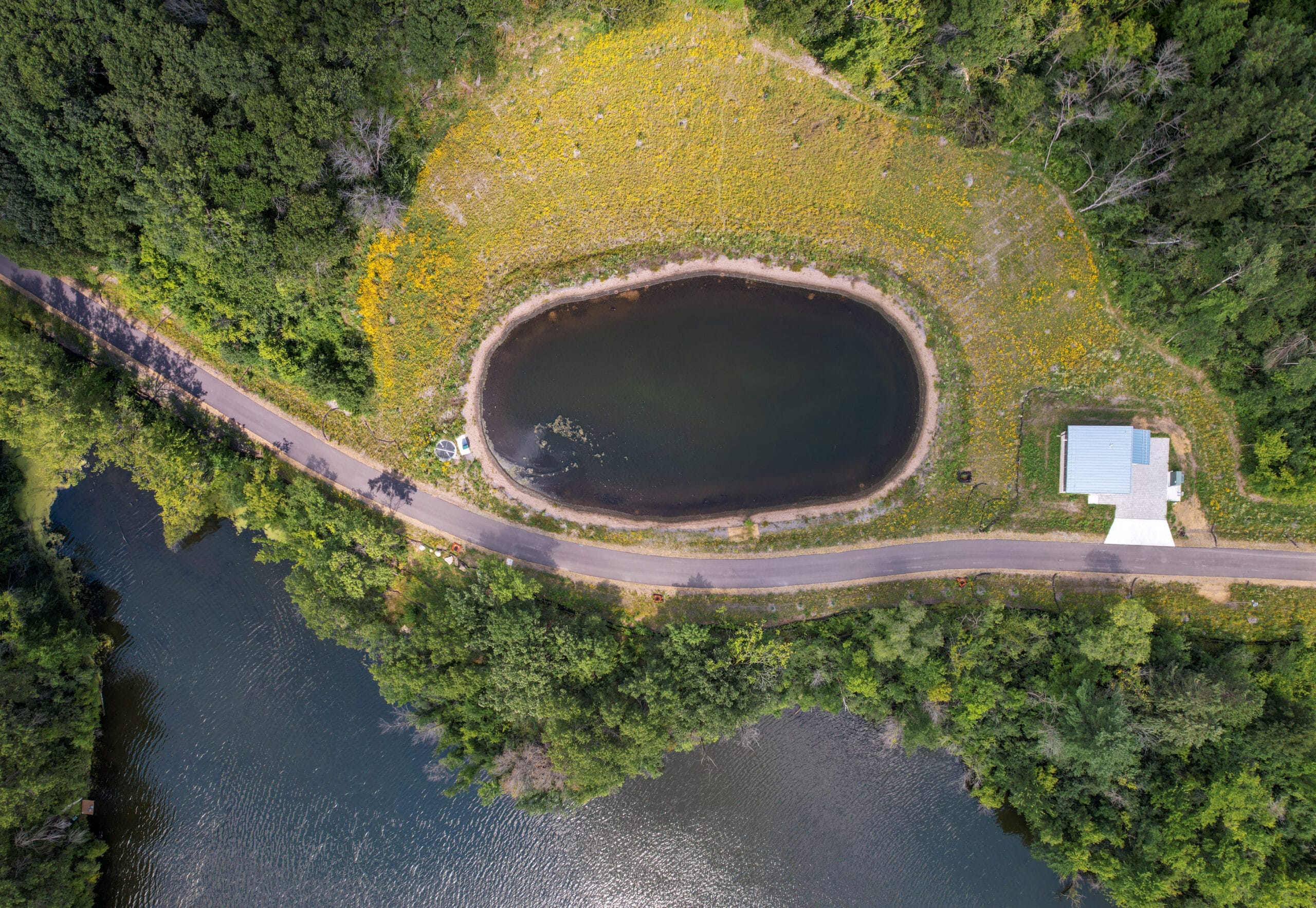
The Wilmes Alum Facility was constructed to improve water quality and clarity in Wilmes Lake. The lake has suffered from excess nutrient loading and nuisance algae blooms, largely due to phosphorus in stormwater. Through a partnership with the City of Woodbury, SWWD financially supported and managed the construction of the treatment facility.
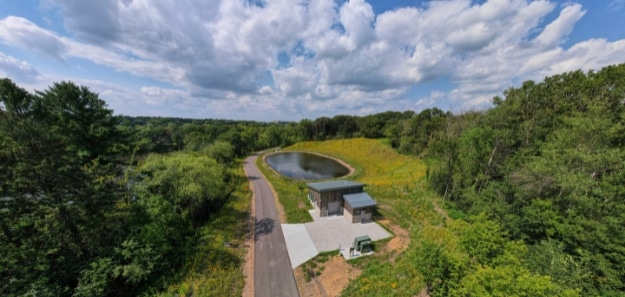
In 2019, a regional feasibility study identified an alum treatment facility within Kargel Park to be the most beneficial and cost-effective way to remove phosphorus from stormwater runoff to Wilmes Lake. Aluminum sulfate (alum) is a safe and commonly used treatment that reacts with phosphorus in water, forming a solid material called “flocculent” that separates from the water and sinks, resulting in cleaner and clearer water. Periodically, the flocculent will need to be removed from the new settling pond.
At the north end of the lake, a lift station pumps stormwater runoff to a small treatment building northwest of the Brookview Road cul-de-sac.
The project is expected to remove between 95 and 283 pounds of phosphorus each year.
Project construction was funded by SWWD; however, ongoing operation and maintenance will be completed by the City of Woodbury public works staff through a funding agreement with SWWD.
Improving Water Quality
The Wilmes Lake subwatershed encompasses approximately 3,240 acres of mostly developed land.
Learn more about the history and conditions of Wilmes Lake
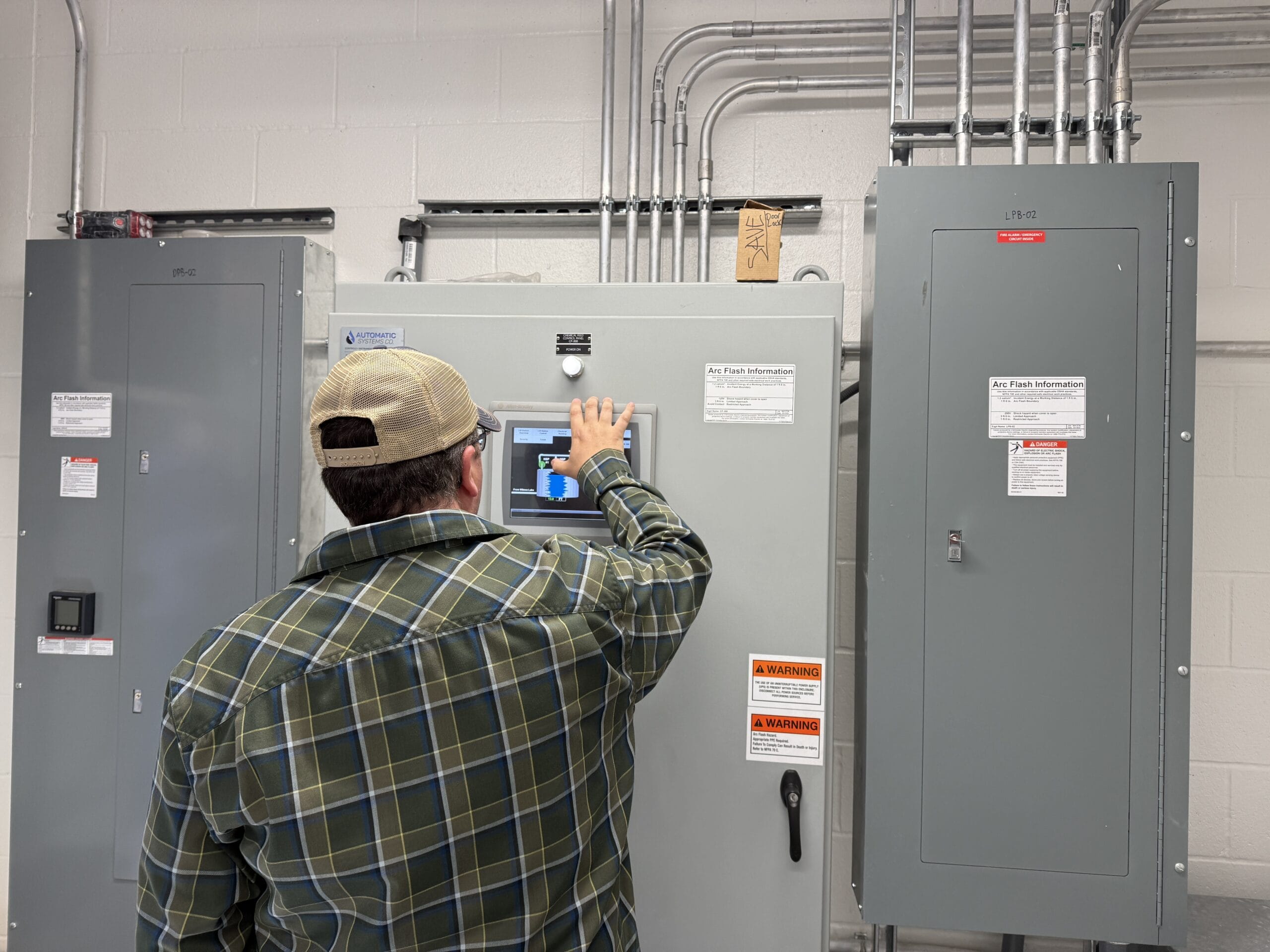
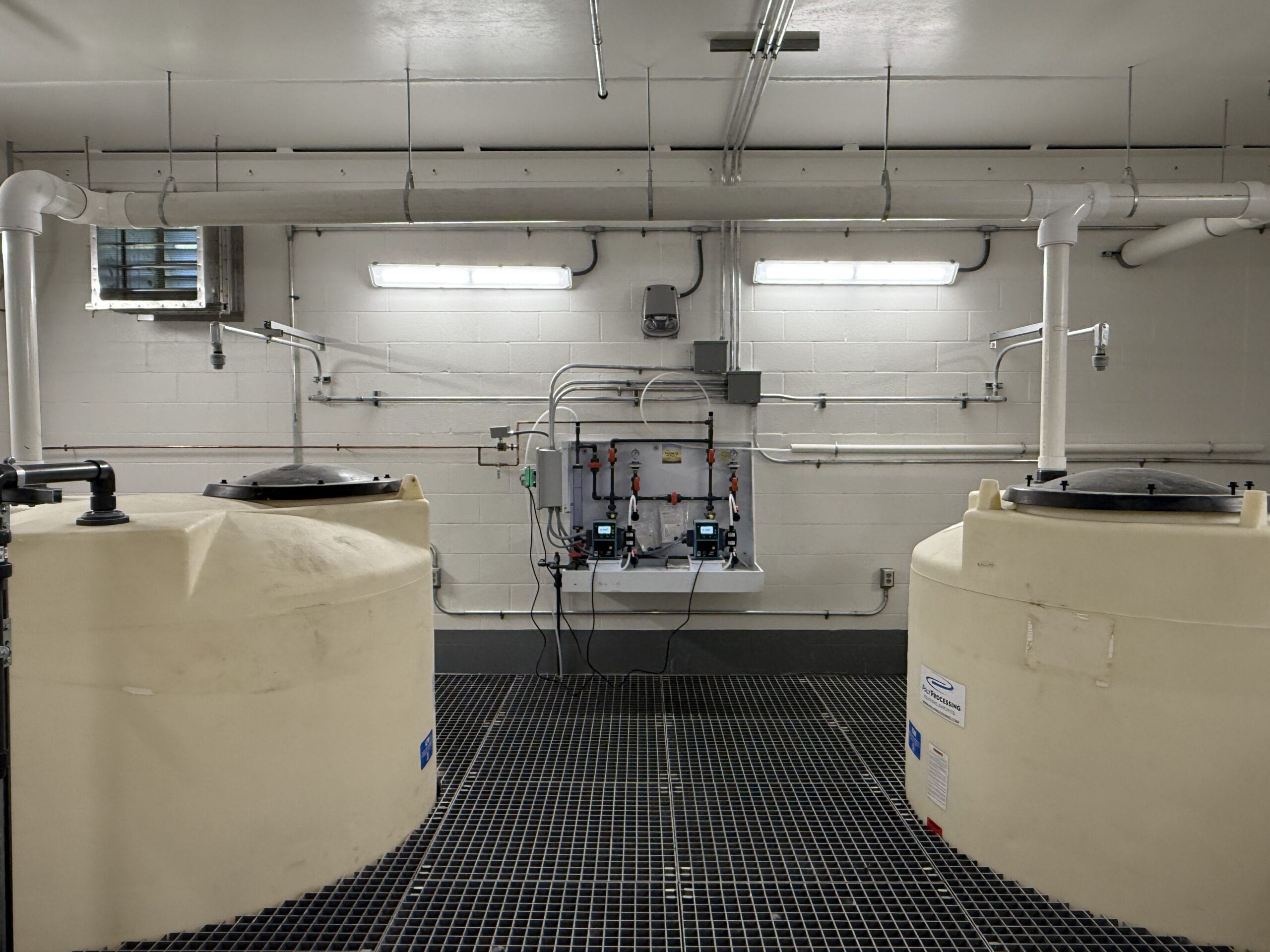
Inside the stormwater treatment facility, water is pumped from the lakes through a constructed channel and into a chemical dosing station. Inside the station, water is dosed with alum (aluminum sulfate), which binds to the phosphorus in the water. The treated water then flows out of the building and into the settling pond. This is where the flocculent is formed, the solid material that grabs onto phosphorus in the water and sinks to the bottom of the settling pond. With phosphorus removed, the water flows from the settling pond and back into Wilmes Lake.
The system first came online in the summer of 2025, and regular water quality monitoring began. The amount of Total Phosphorus (TP) coming into the system before treatment, and out of the system after treatment, is monitored to calculate the rate of phosphorus reduction. Early testing shows reduction rates as much as 57%. Continued tweaks will be made to alum dosing to ensure the system is working at full capacity.
Native restoration
Following the construction of the settling pond and treatment facility building, a native plant restoration began. Minnesota native plants that do well in high sun, and that would provide food and habitat to pollinators were chosen. Flowering species like butterfly milkweed (Asclepias tuberosa), common milkweed (Asclepias syriaca), and rough blazing star (Liatris aspera). Larger Minnesota native bush species were also planted like cardinal dogwood (Cornus sericea), downy serviceberry (Amelancier arborea), and nannyberry viburnum (Viburnum lentago) provide cover for wildlife and food for migratory birds. Native grass species like big bluestem (Andropogon gerardii), prairie dropseed (Sporobolus heterolepis), and little bluestem (Schizachyrium scoparium), were planted. Minnesota native grasses and flowering species have deep and strong roots, which helps rainwater infiltrate into the soil, and prevent erosion into the settling pond.
Wilmes Lake Mural
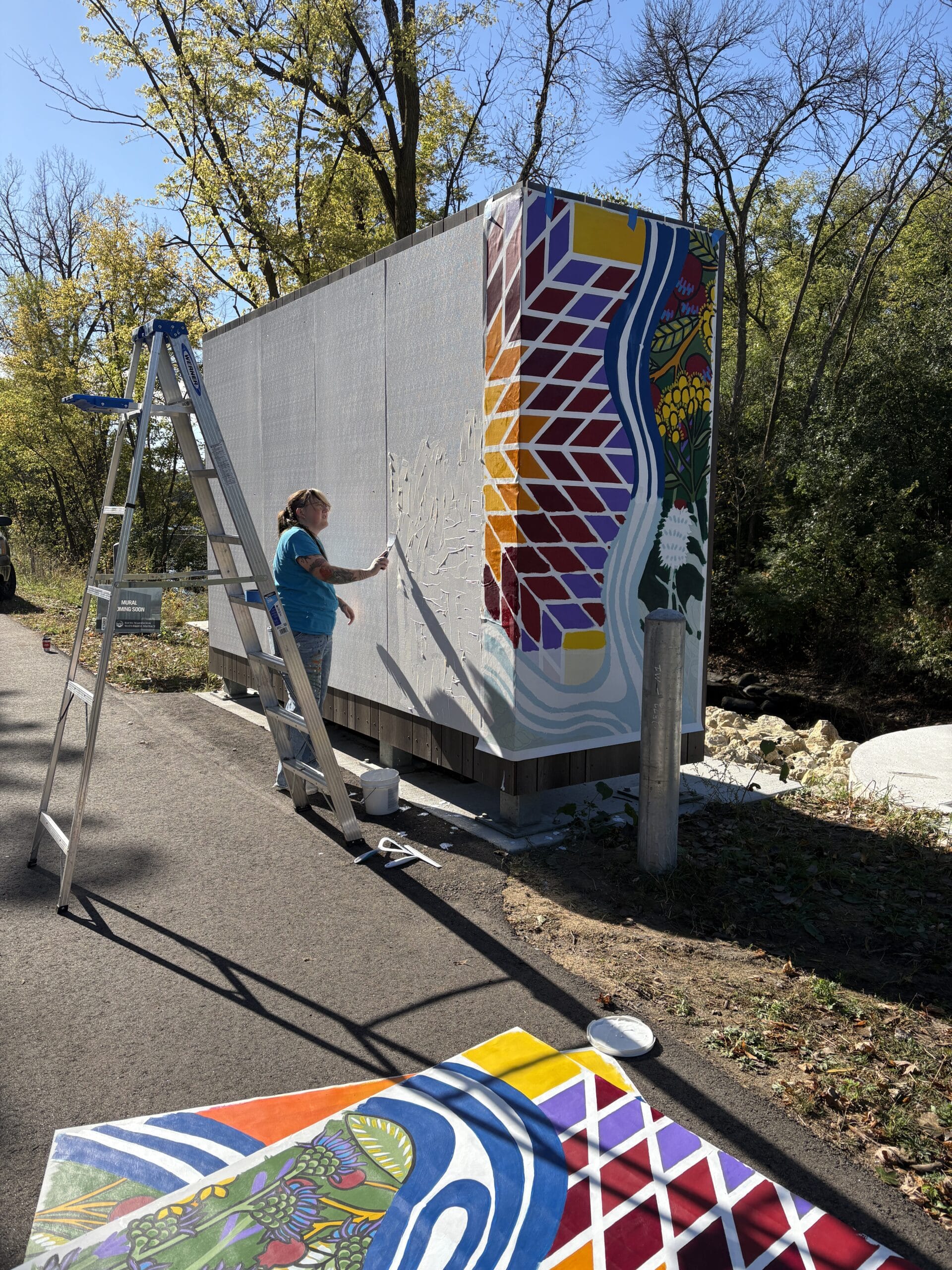
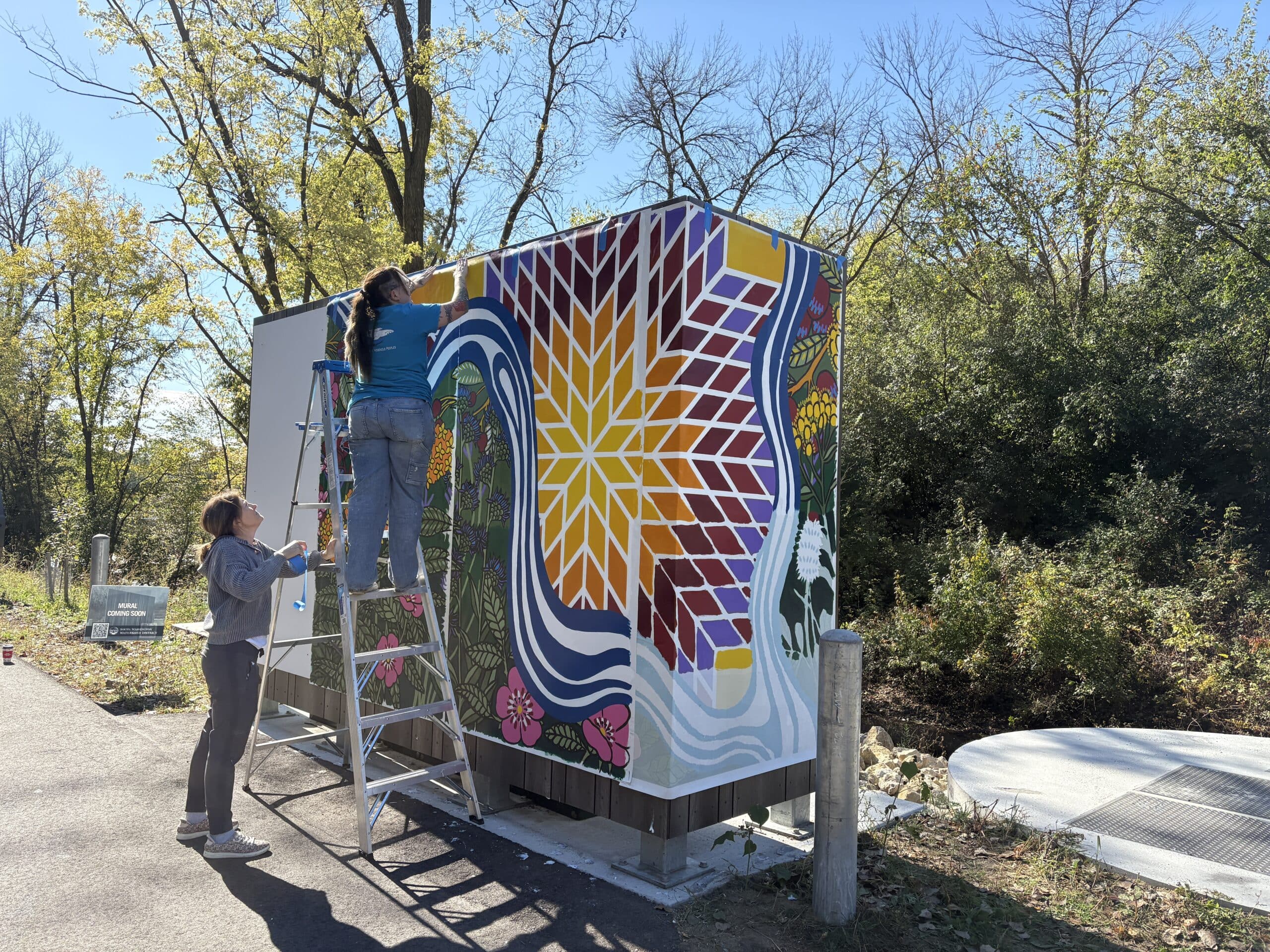
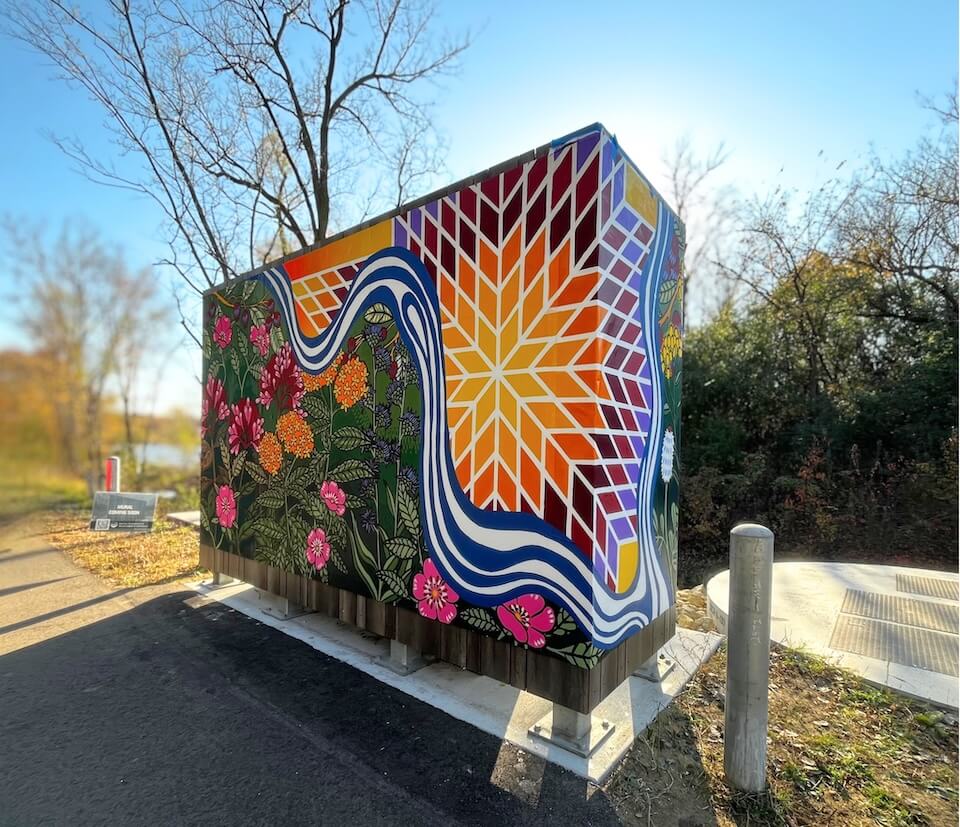
A mural highlighting the central themes of water, ecological conservation, and public engagement was created by muralist Nipinet Landsem and affixed on a blank screening wall along the trail near Tamarack Road. The blank screening wall is a protective screening to the lift station’s technical equipment on the north end of Wilmes Lake. The piece, inspired by the relationship humans have with the land and water, depicts the shape and movement of the Mississippi River and St Croix River as they join at watersheds most southern point, flanking the South Washington Watershed District. The flowing rivers frame a star quilt, representative of the continued Indigenous presence in the area, and is a motif of the local artists’ native tribe of Turtle Mountain Band of Chippewa, the Dakhota, the Lakhota, and the Ojibwe of Minnesota.
From the artist- “Star quilts are given to honor accomplishments or momentous occasions and are difficult to make, requiring precision and care. Like all quilts, they are made up of many parts- each piece of the quilt top, but also the batting, the binding, the backing, and the quilt stitch itself. I think they are a perfect metaphor for communities, ecosystems, and relationships.”
Landsem was selected earlier this year from a vibrant pool of applicants after a thorough review process that included SWWD’s staff, Citizen Advisory Committee, and Board of Managers, as well as staff input from the City of Woodbury.
Nipinet Landsem, who grew up in Washington County, is a Minneapolis-based muralist, tattoo artist, and illustrator, whose work involves water and our relationship to it as part of a larger network that includes plants, animals, and humans.
Kyle Axtell
Staff Contact
Questions? Reach out to Kyle Axtell, Planning & Projects Program Manager, at Kyle.Axtell@swwdmn.gov or call 651.728.6124.