
Hasenbank Stormwater Park
Project Overview
Where water quality meets beauty
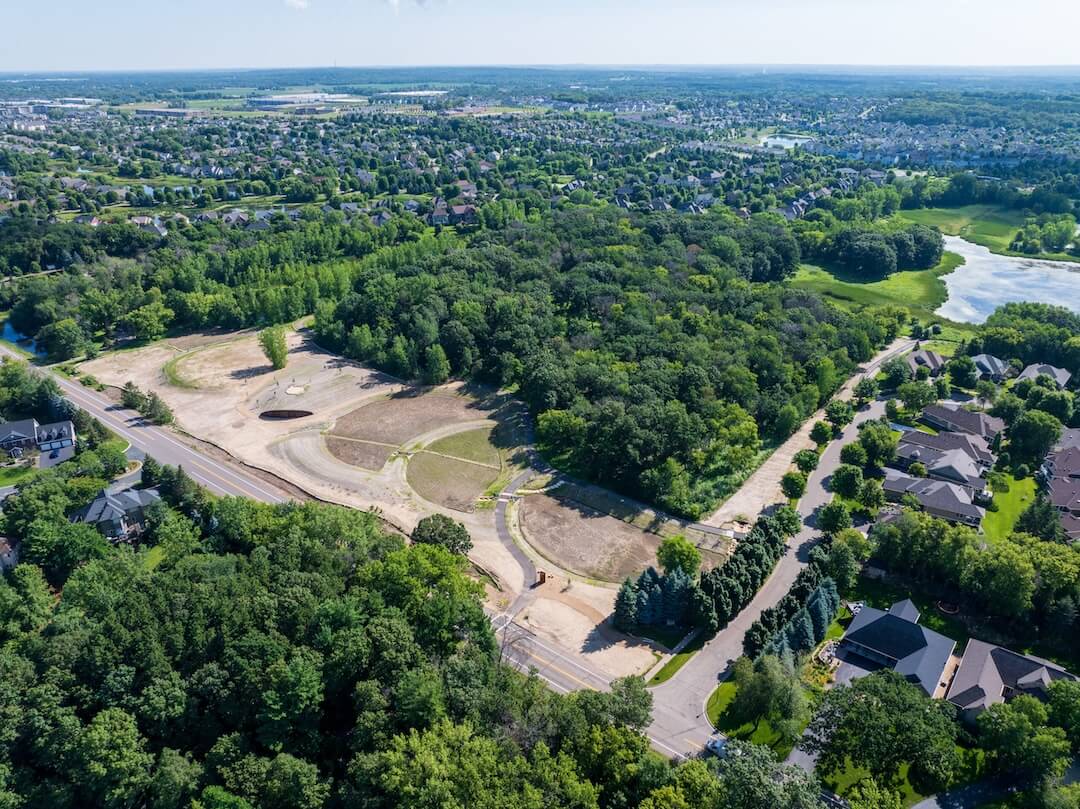
Nestled amongst suburban development in Woodbury, Hasenbank Stormwater Park occupies 5.5 acres of public open space and water quality treatment. This project aims to protect Powers Lake from pollution and state impairment listing, while offering up a unique beautiful educational experience. Hasenbank Stormwater Park brings together the best of water quality treatment, habitat improvement, and public open space, all in one.
The challenge
Fish Lake collects stormwater runoff from much of the Powers Lake watershed, which includes several neighborhoods. Stormwater sends many nutrients, like phosphorus, nitrogen, and chlorides from road salts, to nearby Powers Lake. By treating stormwater before it enters Powers Lake, the lake is protected from ongoing degradation, which can lead to increased algal problems and chloride pollution. Hasenbank Stormwater Park brings together the best of water quality treatment, ecosystem habitat, and public open space, all in one.
Stormwater management
When rain falls on a pervious surface, like lawns, gardens, or forests, water can penetrate the surface and into the ground. But when water falls upon an impervious surface, like roads, roofs, or sidewalks, water runs off the surface and cannot penetrate the ground. When water cannot penetrate the ground, it bypasses a step, and sends the stormwater runoff straight from the street, collecting trash, pet waste, leaves, grass clippings, and other pollutants in the roadway. This is the process of stormwater runoff, and is what can cause super loading of nutrients and pollutants that degrade water quality.
An infiltration basin allows water to collect in one place, and then slowly infiltrate into the ground. This process removes large amounts of the nutrients that cause water pollution and promote algae growth, before it can reach Powers Lake.
In nearby Fish Lake, water collects in the basin to a certain depth before it overtops into a pipped culvert. The water is then pumped through underground pipes to the three constructed infiltration basins at the heart of the park. Once the pump system is activated, water will flow from the basin inlet every seven minutes.
Virtual tour
Follow the journey of water as it flows through the park by taking the Explore Hasenbank Park self-guided tour.
Water quality benefits
The project aims to reduce phosphorus loading into Powers Lake from nearby Fish Lake, and stormwater runoff from the Powers Lake subwatershed. Based on water quality monitoring, there is an expected reduction in total phosphorus loading by about 14 to 44 pounds per year. This is encouraging, as the reduction in phosphorus loads translates to an overall reduction in the total phosphorus concentration in Powers Lake.
The project became operational in 2025, and over time, more water quality benefits from this BMP will be recorded.
Trailside native plantings
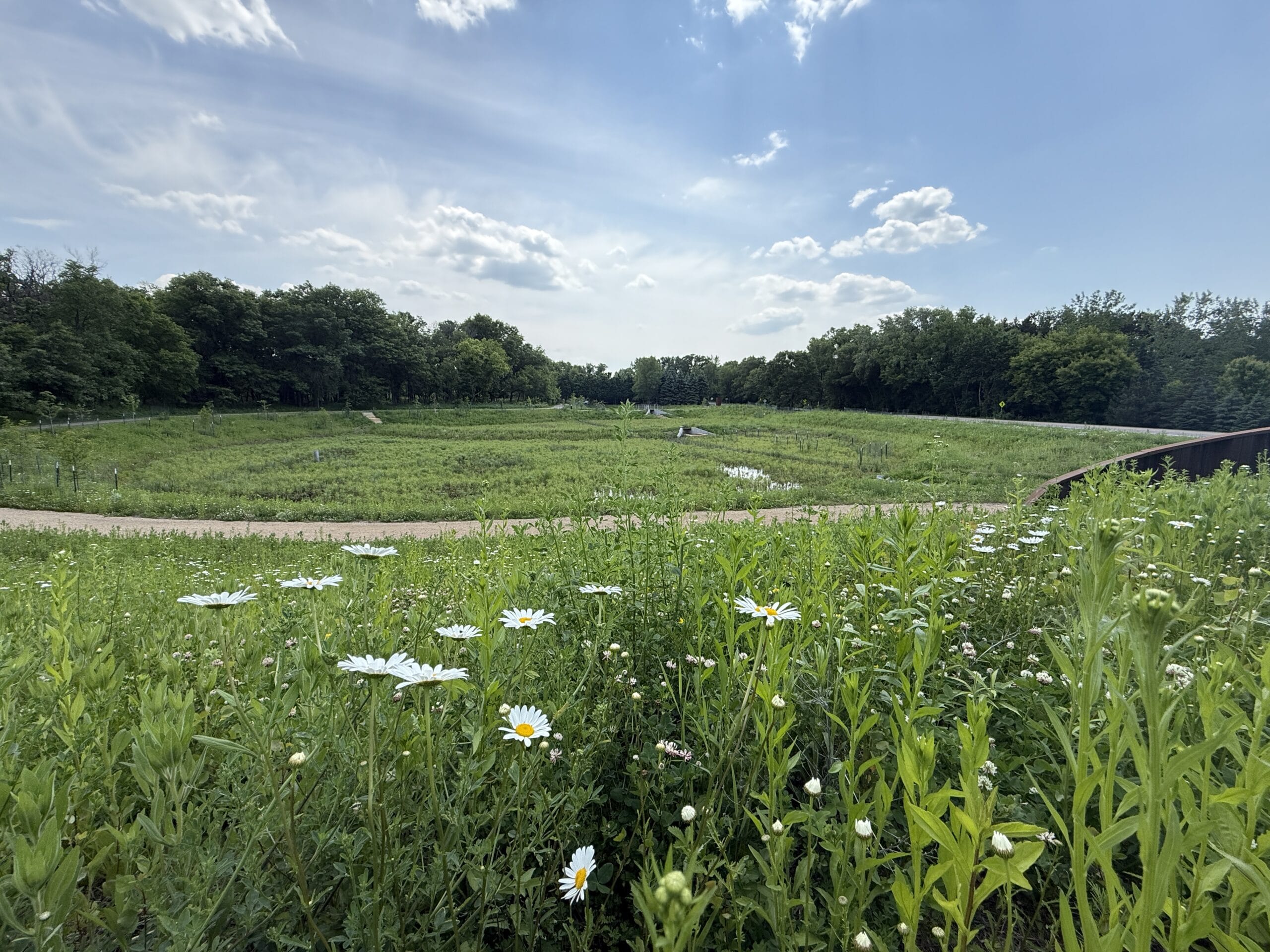
Alongside trails and surrounding basins, Minnesota native plants were seeded. A seed mixture of native grasses and native flowers were spread throughout, and trees planted along the trail to create future shade. Not only will this provide food and habitat for pollinators and other wildlife, it will also support erosion control. The deep roots of the prairie plants acts like a mesh, supporting the soil structure, while breaking it up just enough to allow rainwater to properly soak into the ground.
Public art and public park
The park provides public space to enjoy the outdoors, walk trails, see wildlife, and enjoy public art. Several pieces of public art are featured, created to represent the story of industrial and natural processes that take place there.
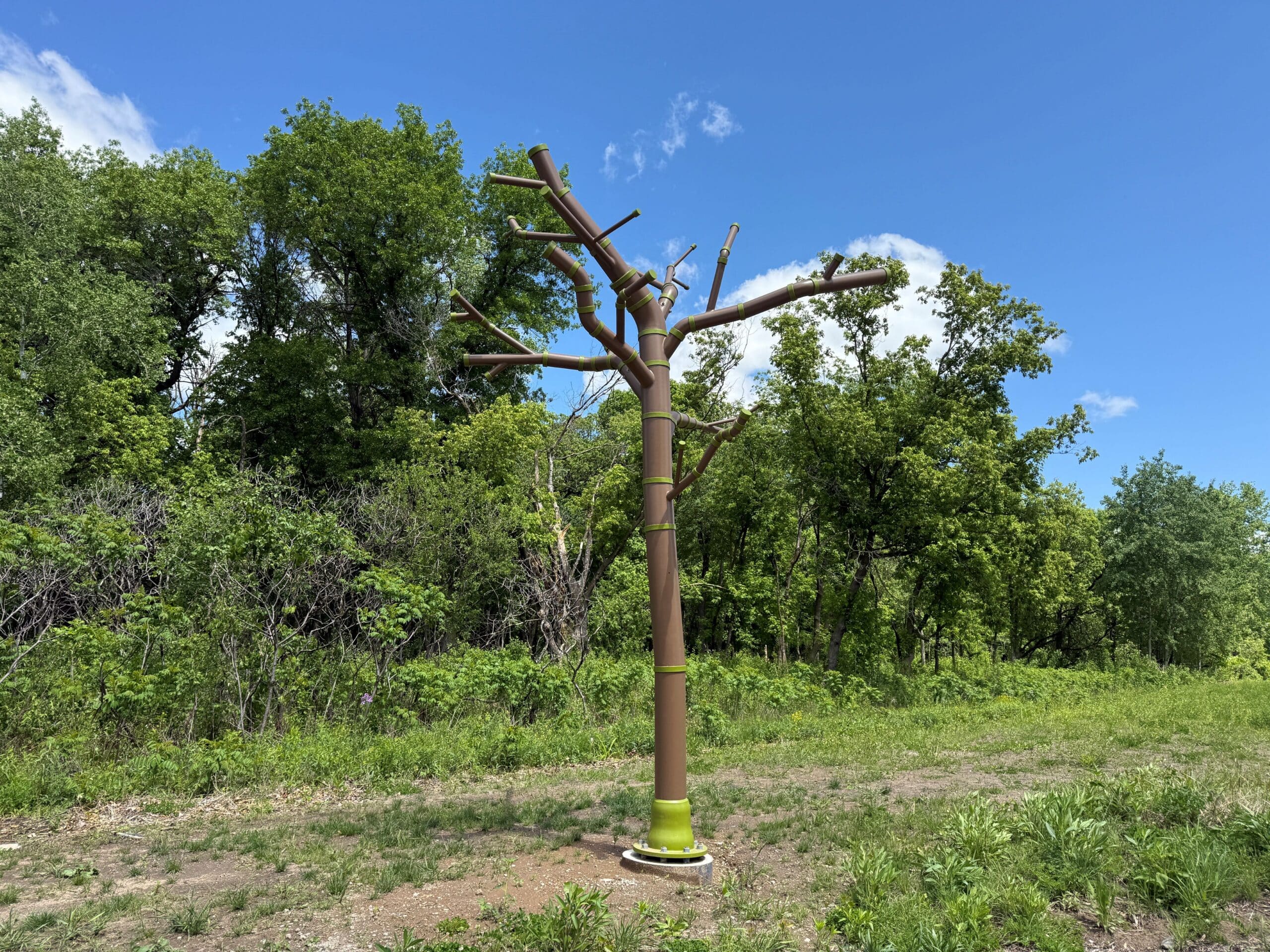
Branching Out by Aaron Dysart
Branching Out is an artistic interpretation of the parallels between natural and engineered water systems. Trees naturally move water through transpiration, drawing it from the ground and releasing it into the air. Similarly, Hasenbank Park pumps water from Fish Lake and infiltrates through the native plants and soil before it flows into Powers Lake. The sculpture, made from engineered water infrastructure materials, mimics a tree and highlights the hidden systems that help maintain water quality in the area.
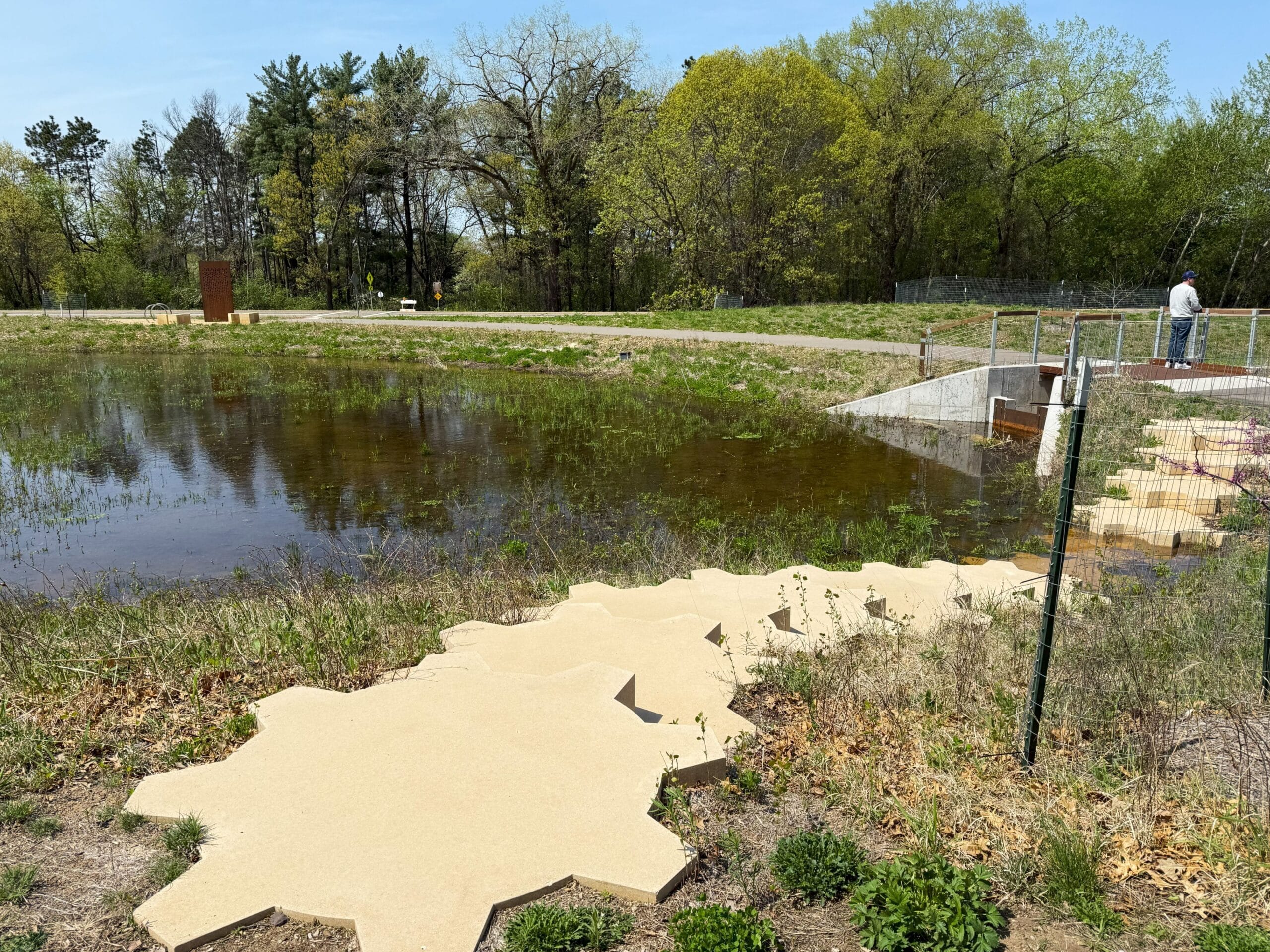
Gears by Christopher E. Harrison
Gears symbolize the hidden mechanical systems managing stormwater in Hasenbank Park. While the pumps and valves are out of sight, the sculpture makes their role visible. The large gears also serve as stepping stones, allowing visitors to walk through the basin and observe changing water levels as water enters the basin and begins to infiltrate.
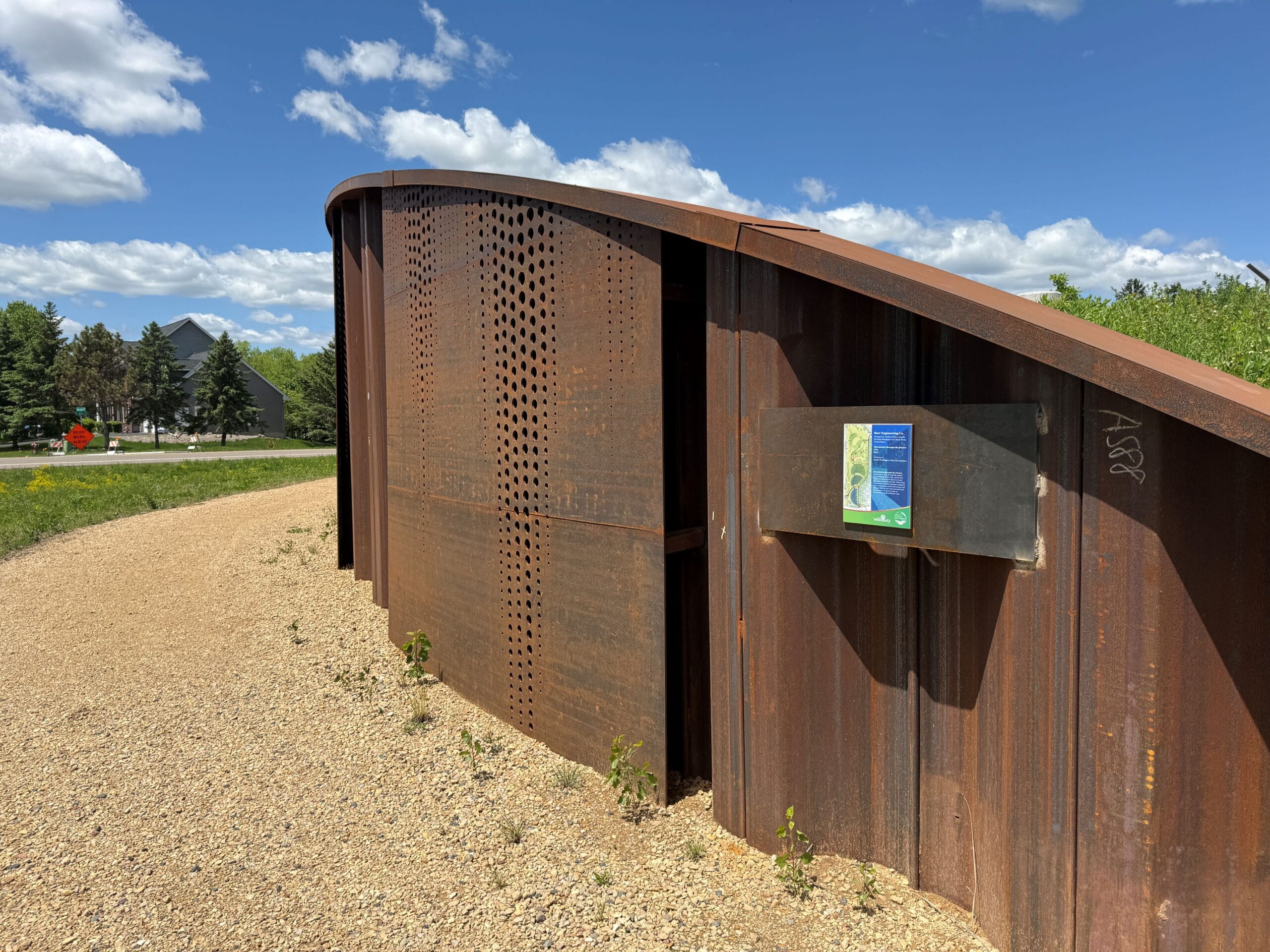
Percolation Through the Prairie by Barr Engineering Co.
The installation represents a “slice through the prairie” by showcasing life-size visualizations of the deep, hidden root systems of native plants in Hasenbank Park. These roots play a crucial ecological role by preventing soil erosion and enhancing water infiltration. They help absorb rain and snowmelt, reducing stormwater runoff into Powers Lake. This highlights the environmental importance of native plant life in the park.
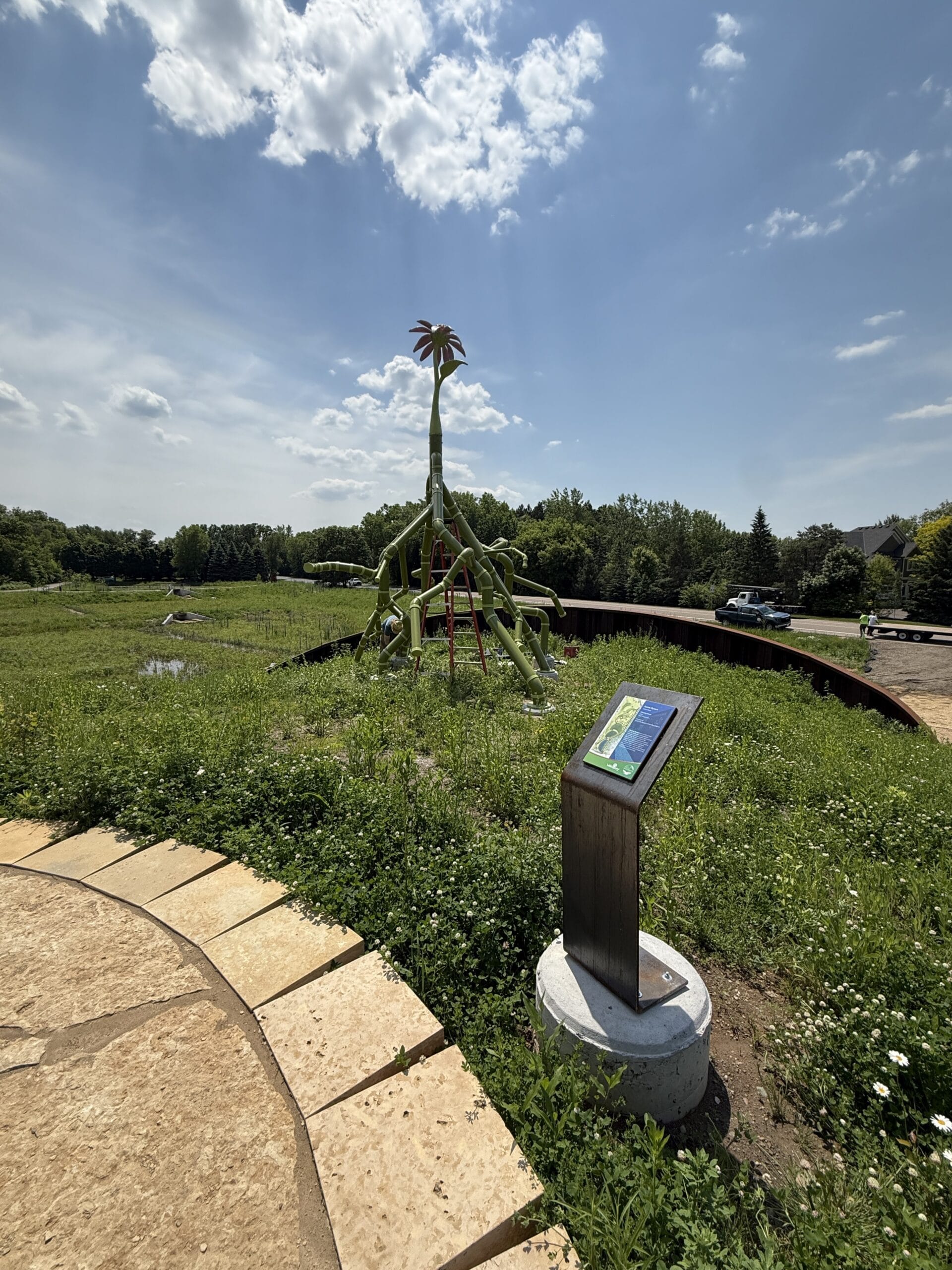
Flowing Roots by Aaron Dysart
Flowing Roots emphasizes the vital role plants play in groundwater infiltration and improving water quality. The sculpture, shaped like a coneflower’s root system, is constructed from industrial water transport materials. This artistic choice highlights Hasenbank Park’s innovative approach to enhancing local surface water quality. It showcases a blend of mechanical engineering, native plants, and soil ecology.
Woodland restoration
Hasenbank Woods is well-suited for restoring Oak Forest and Oak Savanna due to its untilled soils and existing mature oaks. However, without active restoration and maintenance, invasive species like Common Buckthorn and non-native honeysuckles continue to spread. This would ultimately lead to the loss of native plant communities and hinder the regeneration of native species.
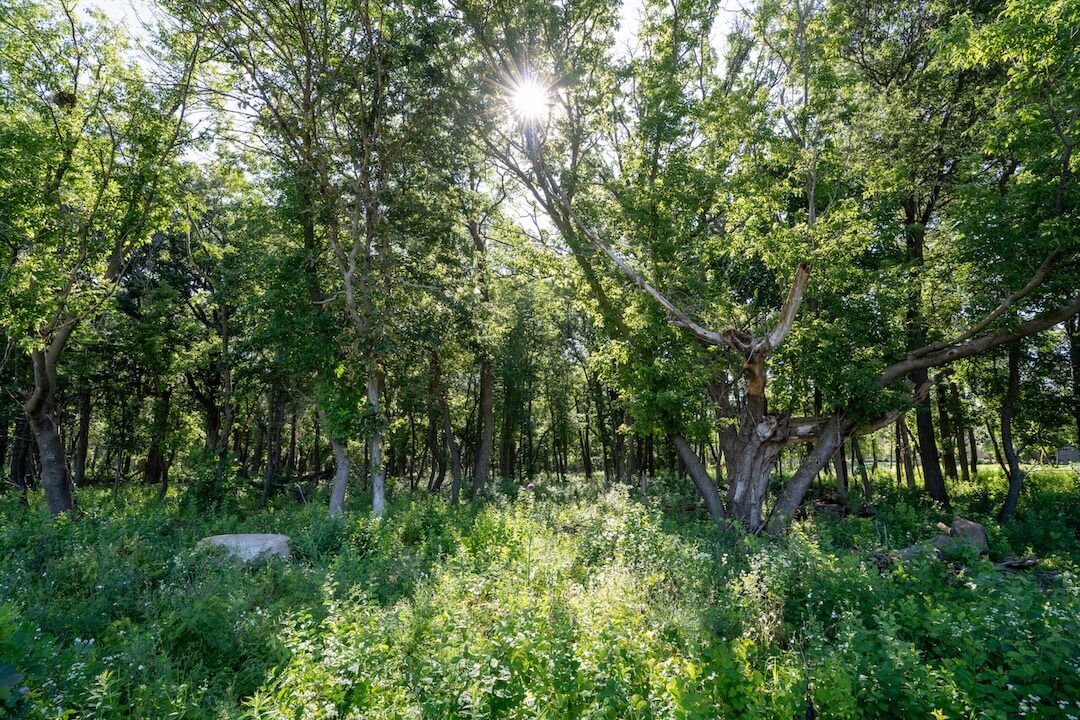
To help with the invasive species removal, grazing goats were brought in. For years, buckthorn removal relied on a combination of hand pulling smaller stems, and cutting/treating of small and large individuals with hand tools and herbicides. While both methods are effective, they are also very labor intensive. Hand pulling can cause soil disruptions, and create a bed for invasive weeds to easily establish in bare patches of soil. Cutting and treating with herbicides can sometimes make the future recruitment of native species more difficult, due to residuals or overspray.
For years, buckthorn removal relied on a combination of hand pulling smaller stems and cutting/treating of small and large individuals with hand tools and herbicides. While both methods can be successful, they are both labor intensive among other drawbacks. Hand pulling can be very disruptive to soils, creating a bed for invasive weeds to easily establish and disturbing soil structure and underground ecosystems. Cutting and treating with herbicides can sometimes have negative and longer terms effects on recruitment of native species due to residuals or overspray.
Goats are effective because they will eat just about anything. They will munch on buckthorn, honeysuckle, garlic mustard, and more. Grazing occurs over multiple years, and works so well because the goats are continually weakening and killing the plants.
Following the third year of grazing, some herbicide treatments have been used to target particularly tough plants. Native flowers, grasses, sedges, shrubs, and understory trees may be planted to augment site diversity.

Kyle Axtell
Staff Contact
Questions? Reach out to Kyle Axtell, Planning & Projects Program Manager, at Kyle.Axtell@swwdmn.gov or call 651.728.6124.