
Seasons Park Stormwater Basin
Project Overview
Improving water quality downstream
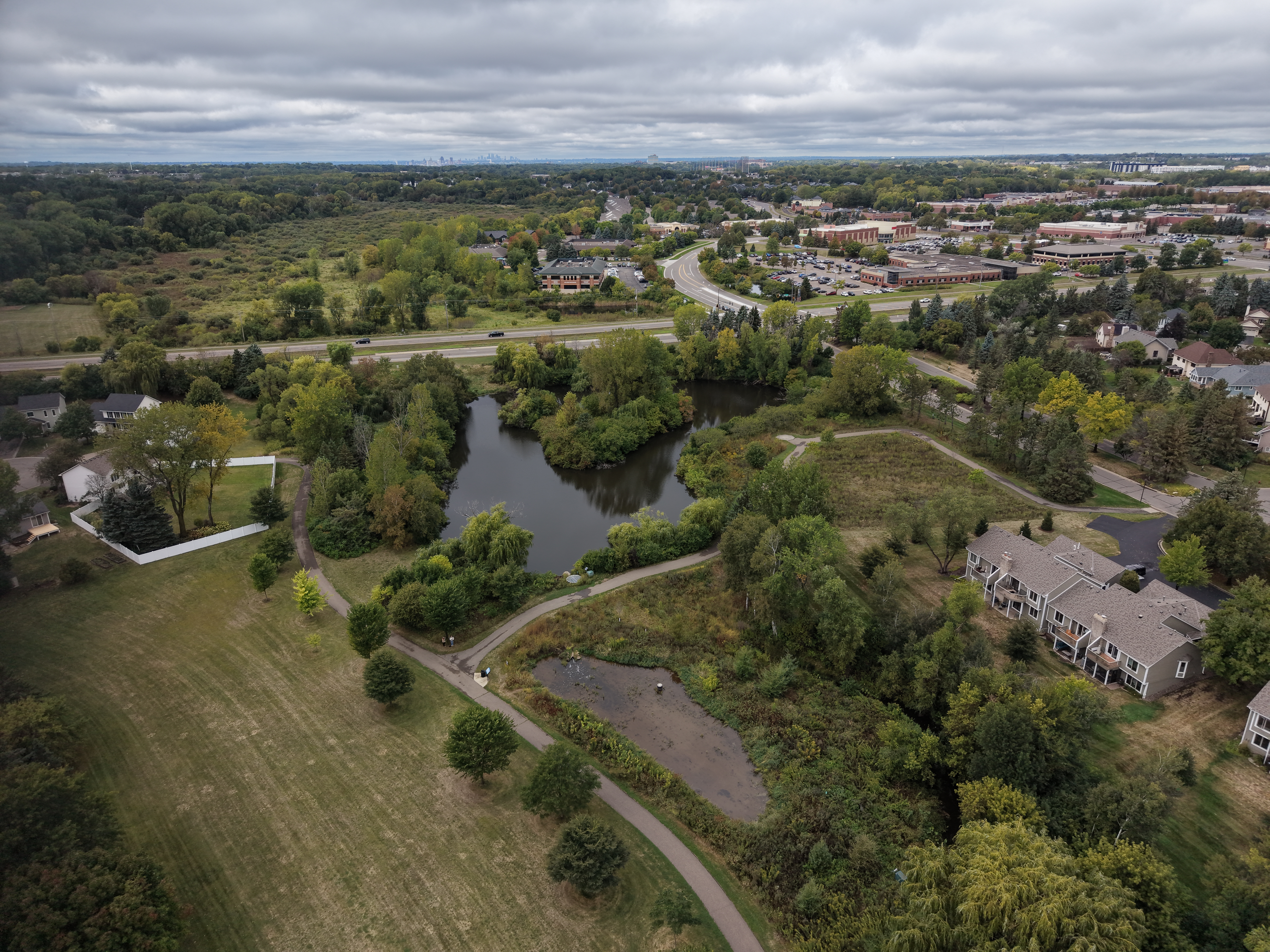
When it rains, runoff from nearby roads flow into the wetland at the corner of Radio Drive and Seasons Parkway in Woodbury. That flowing water is called stormwater, and it contains excess nutrients, sediment, and debris. That stormwater later flows into a small stream, and into Wilmes Lake, bringing excess nutrients, sediment, and debris with it. The Seasons Park water filter garden is a piece in the puzzle to improve water quality at downstream Wilmes Lake.
Impact on water quality
Wilmes Lake has had poor water quality since the 1990s. In fact, it is officially listed as impaired due to too much phosphorous. For a lake to be listed as impaired, it means that some metric of water quality has not met the standard set forth by the Clean Water Act. In Minnesota, the Minnesota Pollution Control Agency manages the impaired waters list.
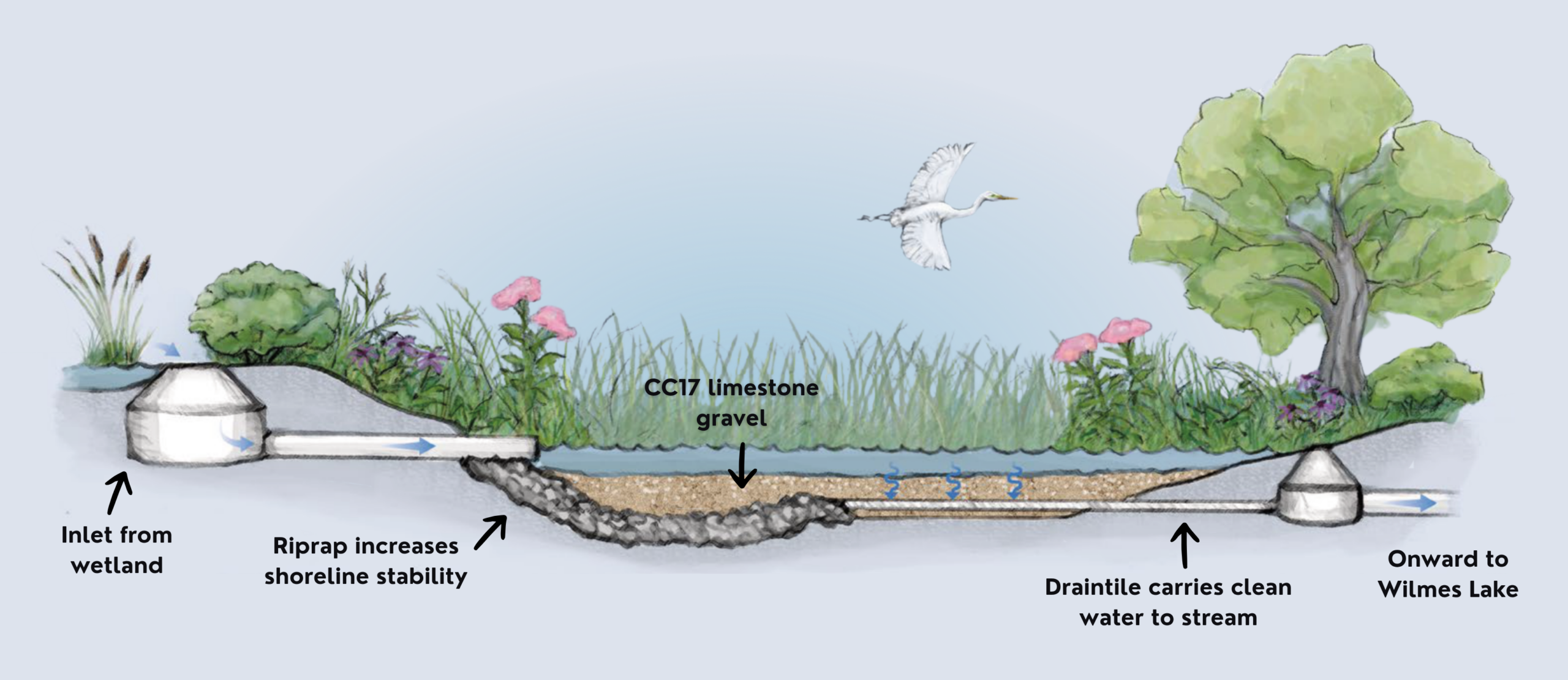
The garden at Season Park is not just a garden, it is a large scale filtration system. Crushed up limestone gravel called “CC17” is the key filtration ingredient. Nutrient-rich water from the wetland washes through it, and sediment and phosphorus are captured. From that point, the now cleaner-water flows through a small stream to Wilmes Lake.
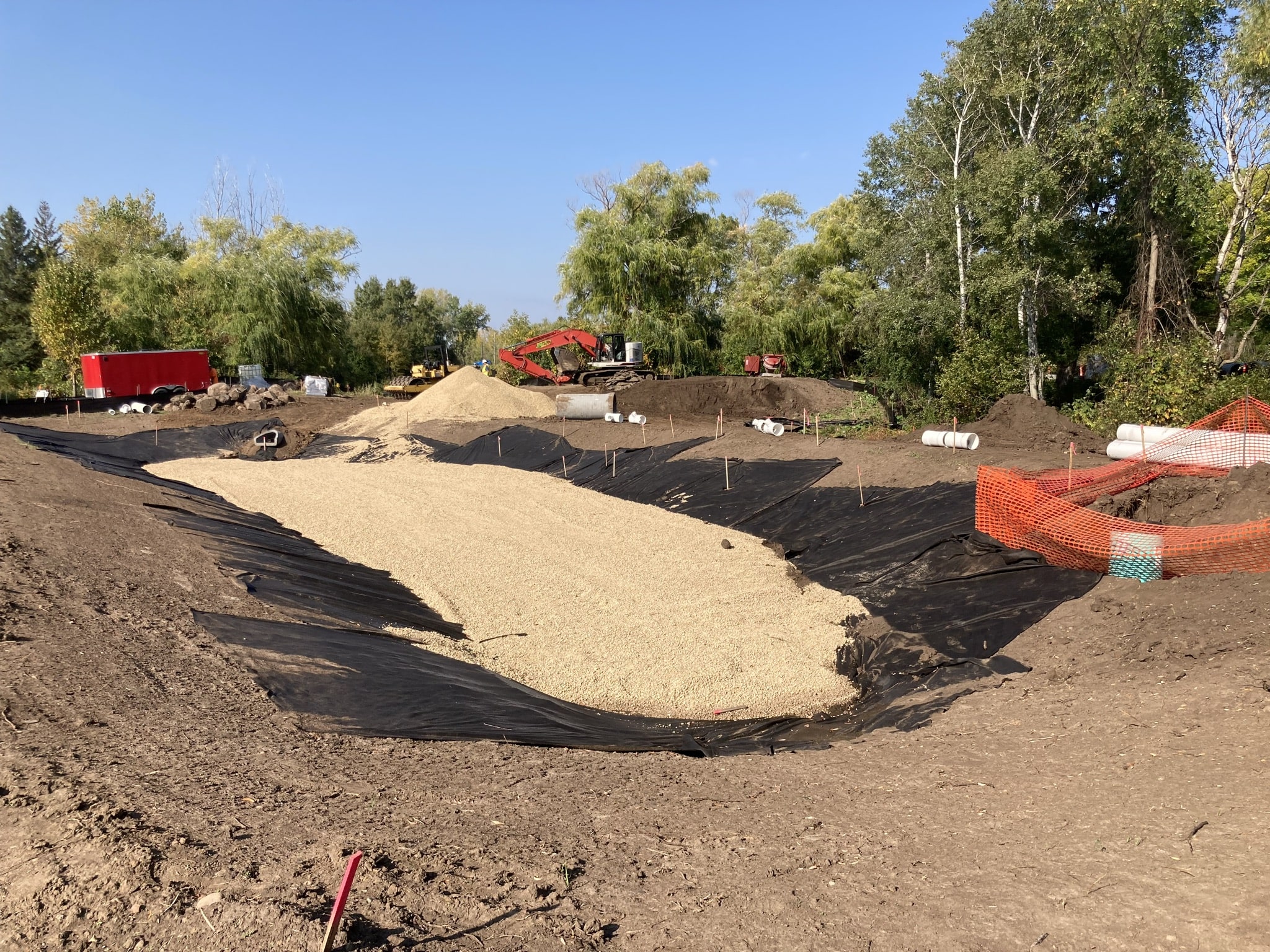
This filter can remove 7 – 10 pounds of phosphorus per year, which is enough to prevent 350 – 500 pounds of algae from growing in Wilmes Lake. Excess nutrients, such as phosphorus from fertilizers, are a major contributor to the over growth of algae in lakes. Since the completion of the filter, total phosphorus loading has fallen by approximately 30%.
Due to its location, the water-filtering garden also helps to remove excess phosphorus from the entire Wilmes Lake subwatershed, which includes Armstrong Lake, Powers Lake, and the north basin of Wilmes Lake.
The water filter garden at Seasons Park is just one way water quality is being managed for Wilmes Lake. Check out the Wilmes Lake Alum Treatment Facility to learn more about how the watershed district supports Wilmes Lake water quality.
Read more about the history and conditions of Wilmes Lake
What’s growing
A native plant restoration was conducted as a part of the Seasons Park project. Some areas around the park were densely packed with invasive buckthorn, non-native honeysuckle, amur maple, and burdock. After clearing these areas, they were restored with a savanna prairie seed mix. Before European settlement in the region, much of the watershed consisted of native savanna prairies.
Other areas of the park were seeded with a pollinator mix appropriate for the dry to mesic soils. Native trees were also planted.
The native plant restoration supports food and habitat for vital pollinator species and other local wildlife, and adds beauty to those recreating on the trails that run through the green corridor.
Work continues at the park. The City of Woodbury opted to downsize a nearby parking lot and install a demonstration bee lawn. This idea came after community members noted the parking lot was infrequently used. This effort both decreases unnecessary impervious surfaces, and increases pollinator habitat and community education.
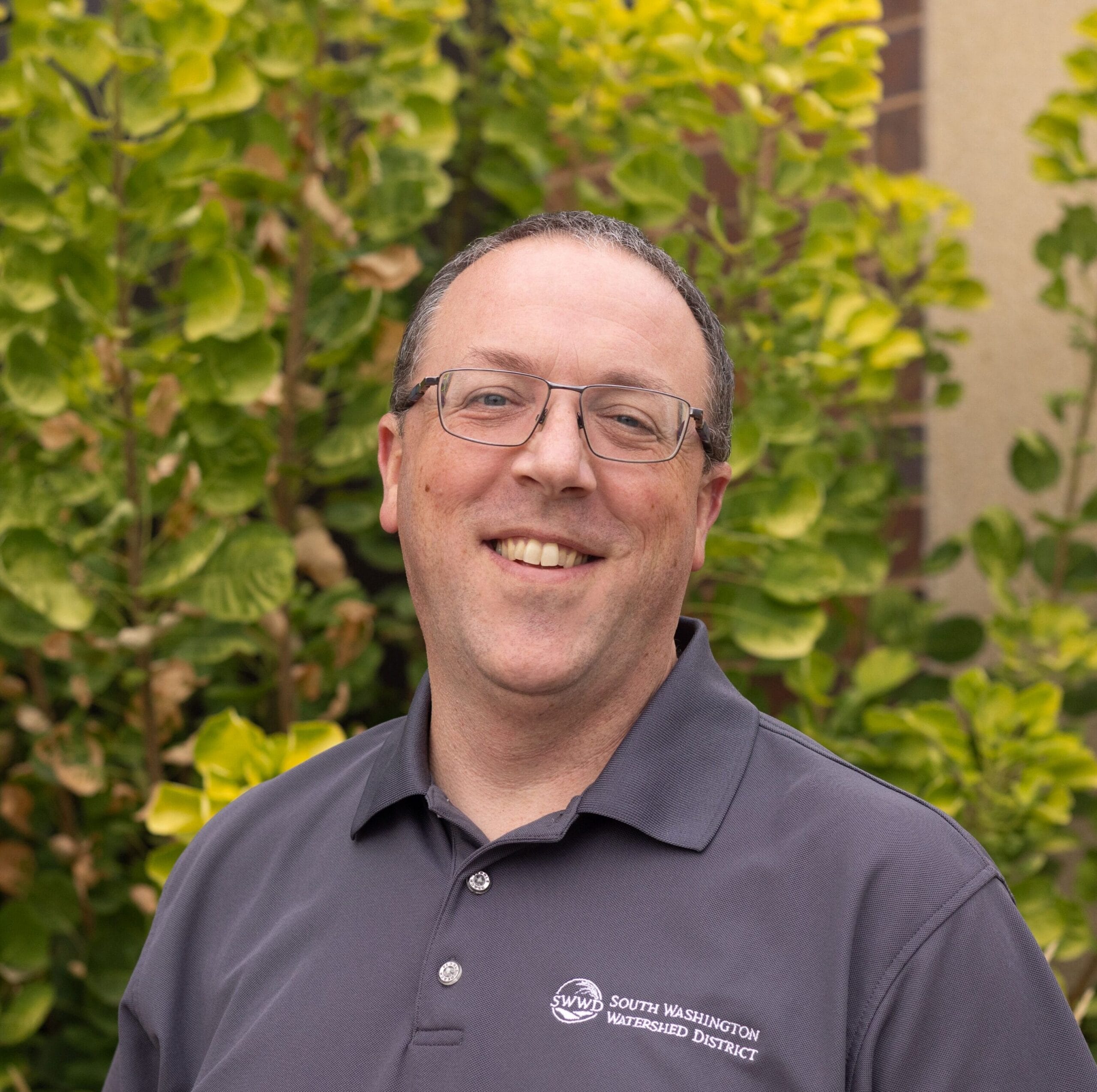
Kyle Axtell
Staff Contact
Questions? Reach out to Kyle Axtell, Planning & Projects Program Manager, at Kyle.Axtell@swwdmn.gov or call 651.728.6124.